The cost of an ube latte
How much does an ube latte really cost to serve, and how much can it bring in? Here is the calculation of material cost, margin and break-even, designed to help you decide with the facts.
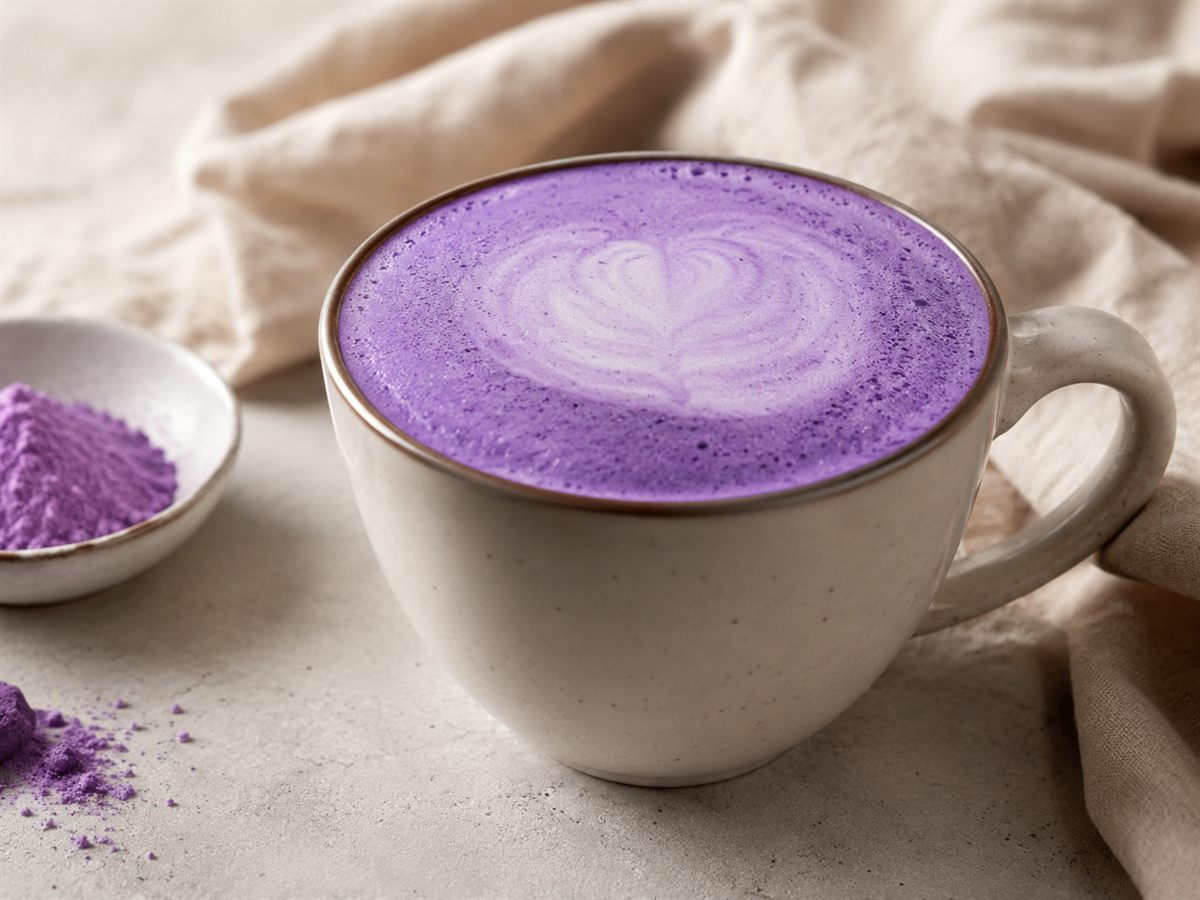
Think in cost per cup
The right indicator isn't the pouch price, but the material cost per drink. With a 100% ube powder, this cost is easy to work out: the price per kilo divided by the grams used per cup. At around 5 g per latte, a 100 g pouch gives about twenty drinks, and 1 kg bulk lowers the unit cost further.
Per cup, ube compares to matcha: a moderate material cost for a premium selling price, and therefore a comfortable margin.
The cost of an ube latte: the line items.
| Line item | Ballpark | Note |
|---|---|---|
| Powder per latte | ≈ 5 g | Basis for calculation |
| Ube material cost | A few tens of cents | By format and dosage |
| Milk / base | Moderate added cost | Depending on the milk |
| Recommended selling price | Premium positioning | Close to a matcha latte |
| Margin per drink | High | A high-value drink |
Ballpark
Note
The calculation, step by step
For your establishment, the method fits in three lines: 1. cost per kilo of powder divided by 1000, multiplied by grams per cup; 2. add the cost of milk and extras (sugar, topping); 3. compare with the selling price to get the margin. With clean dosing and the right format, the material cost of an ube latte stays a small fraction of its selling price.
Buy 1 kg bulk as soon as volume allows: the cost per cup drops clearly and the margin rises, without changing the recipe.
Format makes the margin.
100 g pouch
- ≈ 20 ube lattes
- Very low material cost per cup
- Drinks and pastry
- Ideal to test or launch
1 kg bulk
- ≈ 200 ube lattes
- The lowest cost per cup
- For regular use
- Optimised margin
Indicative ballpark figures, at around 5 g of powder per drink. The result depends on your dosing and your prices.
Quickly worth it
The entry cost is low: one pouch is enough to test a menu, with no special equipment. A few drinks sold cover the purchase, and the colour often acts as free advertising thanks to the photos customers share. Ube is therefore a menu addition with limited risk and quick payback.
- The key indicator: material cost per cup.
- ≈ 5 g per latte, about twenty per 100 g pouch.
- 1 kg bulk lowers the unit cost.
- High margin, low entry cost, quick payback.
A menu addition with limited risk.
Low entry cost, high margin, quick payback: ube joins the menu with no gamble.
Low material cost
A few tens of cents of powder per cup.
Premium selling price
Positioning close to a matcha latte.
No equipment
No hardware investment to start.
Low entry cost
One pouch is enough to test a menu.
Free advertising
The colour travels on its own on social media.
Quick payback
A few drinks cover the initial purchase.
Let's cost your menu.
We help you work out the cost per cup and choose the most profitable format for your volumes. Ask for a tailored proposal.
Your questions: the cost of an ube latte.
How much is the material cost of an ube latte?
The material cost of the powder for a latte comes to a few tens of cents, depending on the format bought and the dosage. It stays a small part of the selling price.
How do I calculate the cost per cup?
Divide the price per kilo of powder by 1000, multiply by the grams used per cup (about 5 g), then add the milk and extras. Then compare with the selling price.
Which format offers the best margin?
1 kg bulk lowers the cost per cup compared with the 100 g pouch. As soon as your volume justifies it, it's the format that optimises the margin.
What price should I sell an ube latte for?
Ube justifies a premium positioning, often close to a matcha latte. The final price depends on your establishment, your area and your clientele.
Is ube profitable to add to a menu?
Yes. The entry cost is low, no equipment is needed, and the colour attracts customers. A few drinks sold cover the initial purchase.