Professional dosages
How much powder per drink, per litre of ice cream, per cake? Here are dosage guidelines designed for use in an establishment, to adjust to your recipes and the colour intensity you want.
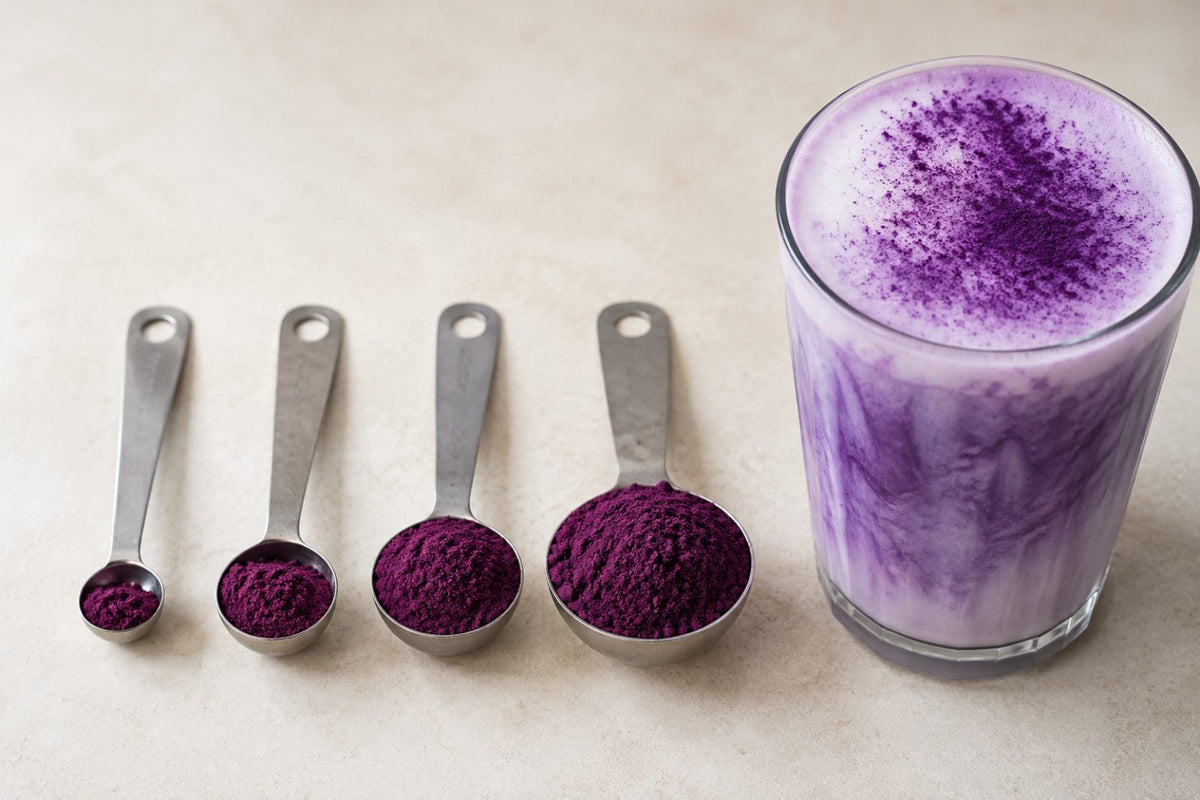
A simple principle
Ube Time powder is 100% ube, with no sugar or filler. Dosage is therefore based on two goals: taste and colour. The larger or more diluted the container, the more powder you need to hold the intensity. The guidelines below start from everyday use; the final adjustment is always made by testing, on your own recipes.
A level teaspoon of powder weighs about 2 to 3 g. It's a handy reference for turning a recipe into a service dose.
Dosage guidelines: by use.
| Preparation | Ube dose | Handy reference |
|---|---|---|
| Ube latte (25 cl) | 4 to 6 g | ≈ 1 to 1.5 tsp |
| Iced latte / frappé | 5 to 8 g | More generous, ice dilution |
| Milkshake (40 cl) | 8 to 12 g | Depending on richness and colour |
| Ice cream / sorbet (1 L base) | 30 to 50 g | Adjust to the purple you want |
| Cream / ganache (1 kg) | 30 to 60 g | Little cooking, intense colour |
| Cake / biscuit (per recipe) | 40 to 80 g | Dose more, cooking dulls it |
Ube dose
Handy reference
Setting colour and texture
Two habits guarantee a consistent result in service: rehydrate the powder in a little hot liquid before adding it, to avoid lumps, and weigh rather than spoon-dose as soon as production grows. For colour, remember that heat dulls the purple: compensate on cooked preparations, stay lighter on cold ones.
Set a weighed recipe card per drink and per tub. You stabilise the taste, the colour and the material cost, whoever is at the station.
Dosage and material cost
Because the powder is pure, every gram counts in the material cost. An ube latte dosed at 5 g costs a few tens of cents of powder, a fraction of its selling price. Getting the dose right therefore means keeping quality and protecting your margin at once.
- Think in taste and colour, depending on the container.
- Reference: 1 level tsp ≈ 2 to 3 g.
- Rehydrate, then weigh as soon as volumes rise.
- Compensate the colour on cooked preparations.
Let's set your dosages together.
We share dosage guidelines and recipe ideas with professionals, tailored to your menu and your volumes.
Your questions: dosages.
What ube dosage for a latte in an establishment?
Count about 4 to 6 g for a 25 cl cup, roughly one and a half teaspoons. Adjust to the cup size and the colour intensity you want.
How much powder for a litre of ice cream?
A common reference is between 30 and 50 g per litre of base, to fine-tune to the purple and taste you want. Cold preserves the colour well.
Why dose more in baked pastry?
Heat dulls ube's natural pigments. On a baked recipe, a slightly higher dose offsets this and keeps a beautiful purple.
Should I weigh or spoon-dose?
The spoon is fine for small volumes. As soon as production grows, weighing guarantees consistent taste, colour and material cost from one service to the next.