Ube and anthocyanins
The deep violet of ube is not just a beautiful colour: it comes from natural pigments called anthocyanins. Here is what they are, and why they are talked about.
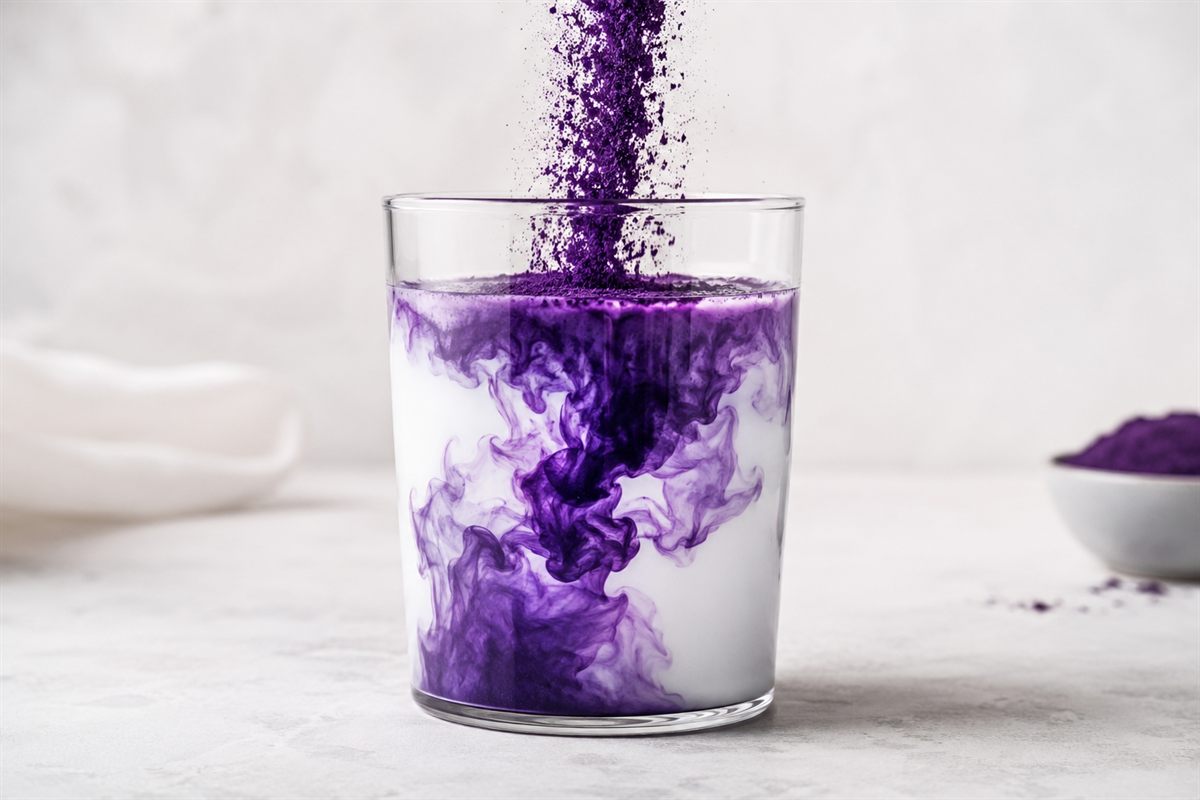
What are anthocyanins?
Anthocyanins are natural pigments of the flavonoid family. They are what give their red, violet or blue colour to many fruits and vegetables: blueberry, blackberry, red cabbage, black grapes… and ube.
In other words, when you see this intense violet, you are seeing anthocyanins.
The word "anthocyanin" comes from the Greek anthos (flower) and kyanos (blue). They are literally the pigments of flowers and coloured fruit.
Pigments with antioxidant properties
Anthocyanins are studied for their antioxidant properties, a feature common to many coloured plant compounds. It is one of the reasons why foods rich in anthocyanins, such as red fruit, are valued in a varied diet.
Ube belongs to this same family of naturally coloured foods.
An intense natural colour is often a sign of a good content of plant pigments. This remains general information, not a health promise.
Ube, a natural source of anthocyanins
Like blueberry or red cabbage, ube draws its colour from these pigments. The Kinampay variety, particularly colourful, is renowned for its deep violet: it is the one we have chosen for our powder.
And since the colour comes from the plant, our powder colours your preparations with no added colouring.
The colour, a clue to richness
The more intense the violet, the higher the anthocyanin content usually is. This is also why the quality of an ube powder is judged, among other things, by the depth of its colour.
- Anthocyanins are natural violet/red pigments.
- They have antioxidant properties, common to coloured foods.
- Ube naturally contains them: its colour comes from the plant, not from a colouring.
See why ube is violet, the benefits of ube, or its nutritional values.
The violet of nature.
Our ube Kinampay powder: a natural violet colour, rich in pigments, with no added colouring.
Your questions: ube and anthocyanins.
What are anthocyanins?
Natural pigments of the flavonoid family, responsible for the red, violet or blue colour of many fruits and vegetables, including ube.
Is ube rich in antioxidants?
Ube contains anthocyanins, known for their antioxidant properties, like other violet and red foods. It fits well in a varied diet.
Where else do you find anthocyanins?
In blueberry, blackberry, blackcurrant, red cabbage, black grapes… and ube. They are the foods with a red, violet or blue colour.
Does ube's colour prove its richness in pigments?
An intense violet often goes hand in hand with a good anthocyanin content. It is a good quality clue for an ube powder.
Does ube powder contain colourings?
No. Its colour comes only from the anthocyanins naturally present in the root. Our powder is 100% ube.