Ube in the Philippines
In the Philippines, ube is far more than an ingredient: it is a piece of culture, present from family meals to grand celebrations. Here is the place it holds in Filipino daily life and traditions.
An everyday ingredient
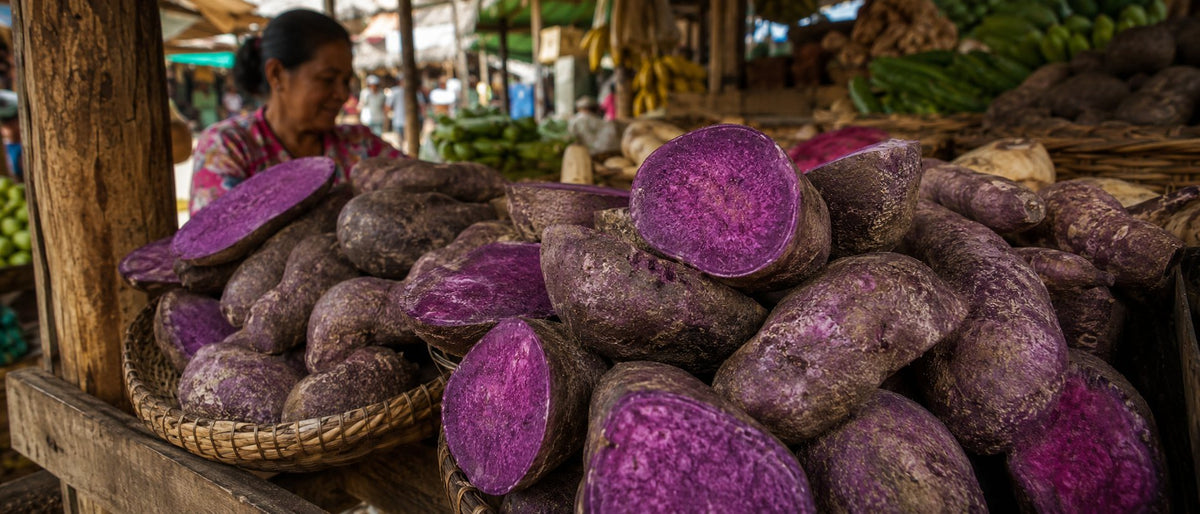
In the Philippines, ube has always been part of the culinary landscape. It is cooked at home, shared with family, turned into sweets. Far from a fad, it belongs to the taste memory of several generations, just like other great classics of the country.
The word "ube" comes from the Filipino languages. It refers to the purple yam, distinct from taro and the purple sweet potato with which it is sometimes confused.
Festivals and celebrations
Ube shines especially at celebrations. Its violet colour, festive and generous, makes it a star of Christmas tables, birthdays and large gatherings. It appears in cakes, ice creams and of course the essential ube halaya, often made in quantity to be shared.
In Filipino cooking, ube is tied to sharing and generosity. Its presence on a table is a sign of celebration.
A galaxy of desserts
The Philippines has developed an incredible variety of ube sweets: the halaya jam, the frozen dessert halo-halo, the ensaymada brioches, the pandesal breads, the hopia and many more. Every region, every family has its recipes, passed down and reinvented.
To taste this heritage, start with ube halaya: it is the base of many Filipino desserts, and a delight by the spoonful.
Traditions and regional differences
As often in the Philippines, customs vary from one region to another. The Kinampay variety from Bohol is the most renowned, prized for its fragrance and colour. Elsewhere, ube is grown and cooked in its own way, with local know-how and specialties.
- Ube is a traditional, family food in the Philippines.
- It is tied to celebrations and sharing.
- It comes in a multitude of desserts (halaya, halo-halo, ensaymada…).
- The Kinampay from Bohol is its most renowned variety.
See the history of ube, the Kinampay from Bohol, or all our recipes.
A piece of the Philippines, at home.
Our 100% ube Kinampay powder comes from this Filipino tradition. It's yours to bring to life in your lattes and desserts.
Your questions: ube in the Philippines.
What place does ube hold in Filipino culture?
A central place in family and festive desserts. Ube is tied to sharing and generosity, and often appears at celebrations.
What are the Filipino ube desserts?
Among the best known: ube halaya, halo-halo, ensaymada, ube pandesal, hopia, as well as many cakes and ice creams.
Is ube linked to celebrations in the Philippines?
Yes. Its festive violet colour makes it a star of Christmas tables, birthdays and large gatherings.
What is the most renowned ube variety?
The Kinampay from Bohol, prized for its fragrance and exceptional violet colour. It is the variety we have chosen.
Which Filipino dessert should you start with?
Ube halaya, a purple yam jam, is an excellent gateway and the base of many desserts.