Ube or Purple Sweet Potato
Here is the subtlest mix-up of all. This time, both are genuinely purple, and genuinely natural. And yet ube and purple sweet potato remain two quite distinct plants.
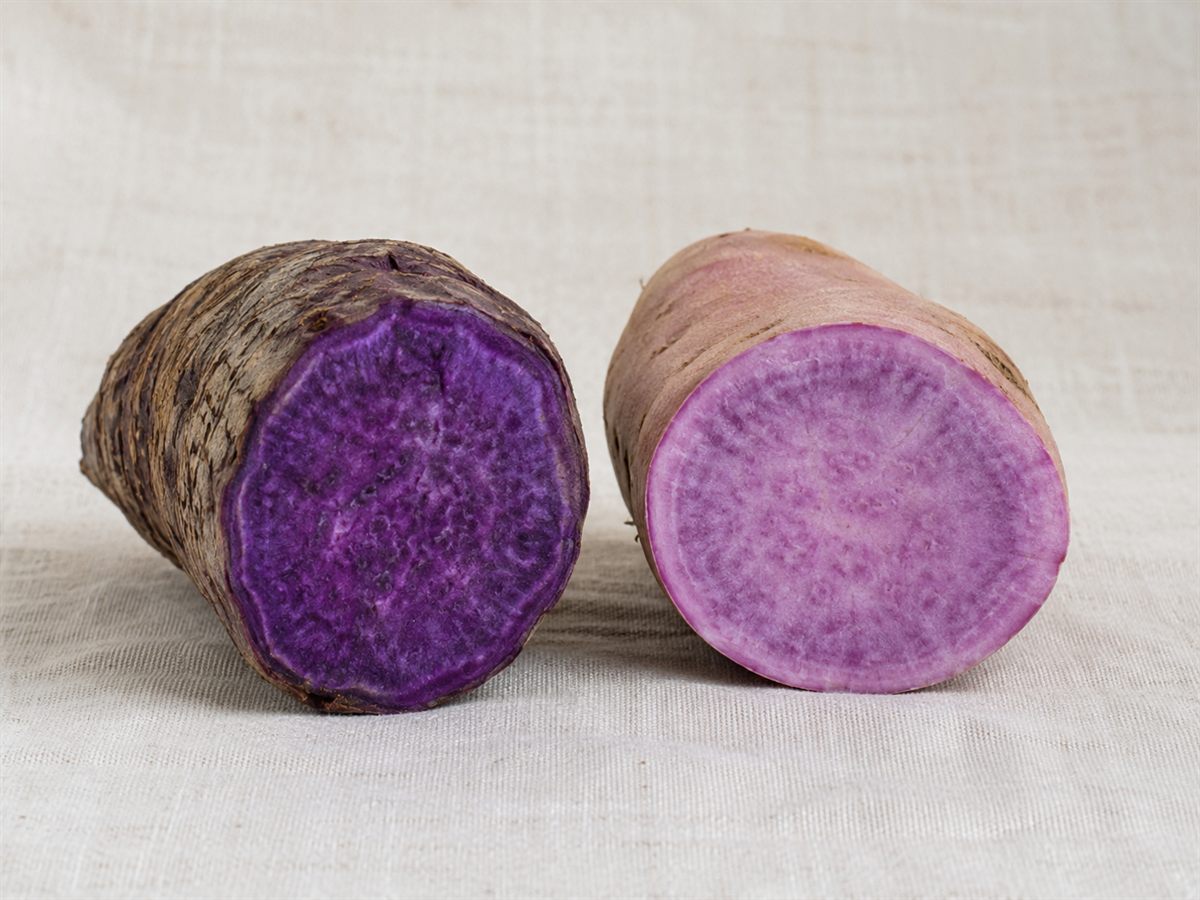
Two purples, two plants
With taro, the purple was often added. Here, nothing of the sort: both ube and purple sweet potato draw their colour from nature.
But make no mistake. Beneath that same purple hide two plants, two families, two tastes.
Ube or sweet potato: the match-up.
| Criterion | Ube | Sweet potato |
|---|---|---|
| Nature | Purple yam (root) | Sweet potato root |
| Botanical name | Dioscorea alata | Ipomoea batatas |
| Family | Yams (Dioscoreaceae) | Bindweed (Convolvulaceae) |
| Colour | Natural purple (anthocyanins) | Natural purple (anthocyanins) |
| Taste | Sweet, vanilla, nutty | Very sweet, sweet-potato flavour |
| Caffeine | None | None |
Ube
Sweet potato
The yam and the sweet potato
Ube (Dioscorea alata) is a yam, from the Dioscoreaceae family.
Purple sweet potato (Ipomoea batatas) belongs, for its part, to the bindweed family, the Convolvulaceae. Two unrelated plants, brought together by their colour alone.
The sweet potato, whether white- or orange-fleshed, has nothing to do with the potato. And its purple version is no cousin of ube: merely a neighbour in colour.
A natural purple on both sides
Good news: unlike taro, purple sweet potato is genuinely purple. Its colour, like ube's, comes from anthocyanins.
Two ingredients, one same colour secret, entirely plant-based.
Ube or purple sweet potato: in both cases, the colour is natural. It is the taste that will make the difference in your recipes.
Taste: where it all plays out
Purple sweet potato is frankly sweet, with that typical sweet-potato flavour, more rustic.
Ube, meanwhile, is more delicate and refined: notes of vanilla and hazelnut, a creamy texture, without the « vegetable » side.
For a delicate, fragrant drink or dessert, ube wins. Purple sweet potato, sweeter, shines above all roasted or mashed.
In the kitchen, two uses
Same purple, different territory.
Purple sweet potato is roasted, mashed, slipped into moist, well-sweetened cakes. Ube, more delicate, excels in lattes, ice creams and refined desserts where you want colour and a vanilla fragrance, not a vegetable taste.
For an ube latte or a dessert cream, choose ube. Purple sweet potato will be perfect in a more filling preparation.
So, which to choose?
Both lend themselves to colourful desserts. But ube brings finesse and fragrance, while sweet potato brings sweetness and body.
- Ube is a yam (Dioscorea alata); purple sweet potato an Ipomoea batatas, two different families.
- Both are naturally purple (anthocyanins).
- Ube: sweet, vanilla, refined. Sweet potato: very sweet, more rustic.
See also ube or matcha and ube or taro, or go back to what is ube?
Team purple?
Discover ube, the sweet, refined purple, naturally caffeine-free. In powder, or in a capsule ready in 30 seconds.
Your questions: ube or sweet potato.
Are ube and purple sweet potato the same?
No. They are two plants from different families: ube is a yam, sweet potato an Ipomoea batatas.
Are both naturally purple?
Yes, both, thanks to anthocyanins. Unlike taro, whose purple is often added.
What taste sets them apart?
Purple sweet potato is very sweet, with a rustic flavour; ube is milder, vanilla and refined.
Can you make a purple sweet potato latte?
Yes, but the taste will be sweeter and more rustic. For a delicate, vanilla latte, ube remains the best choice.
Can you swap one for the other?
In dessert, yes, but the result changes: sweet potato is sweeter, ube more fragrant and delicate.
Ube or purple sweet potato for a colourful dessert?
Both colour naturally. Ube brings finesse and fragrance, sweet potato sweetness and body.
Does purple sweet potato contain caffeine?
No, like ube, it is naturally caffeine-free.
Which is the rarer?
Ube is rarer and more sought-after; sweet potato, even purple, is far more common.