What Is Ube?
A root from the Philippines. A purple you'd think unreal, yet 100% natural. A soft taste, between vanilla and hazelnut.
This is ube: the ingredient that turns a simple cup into a little journey.
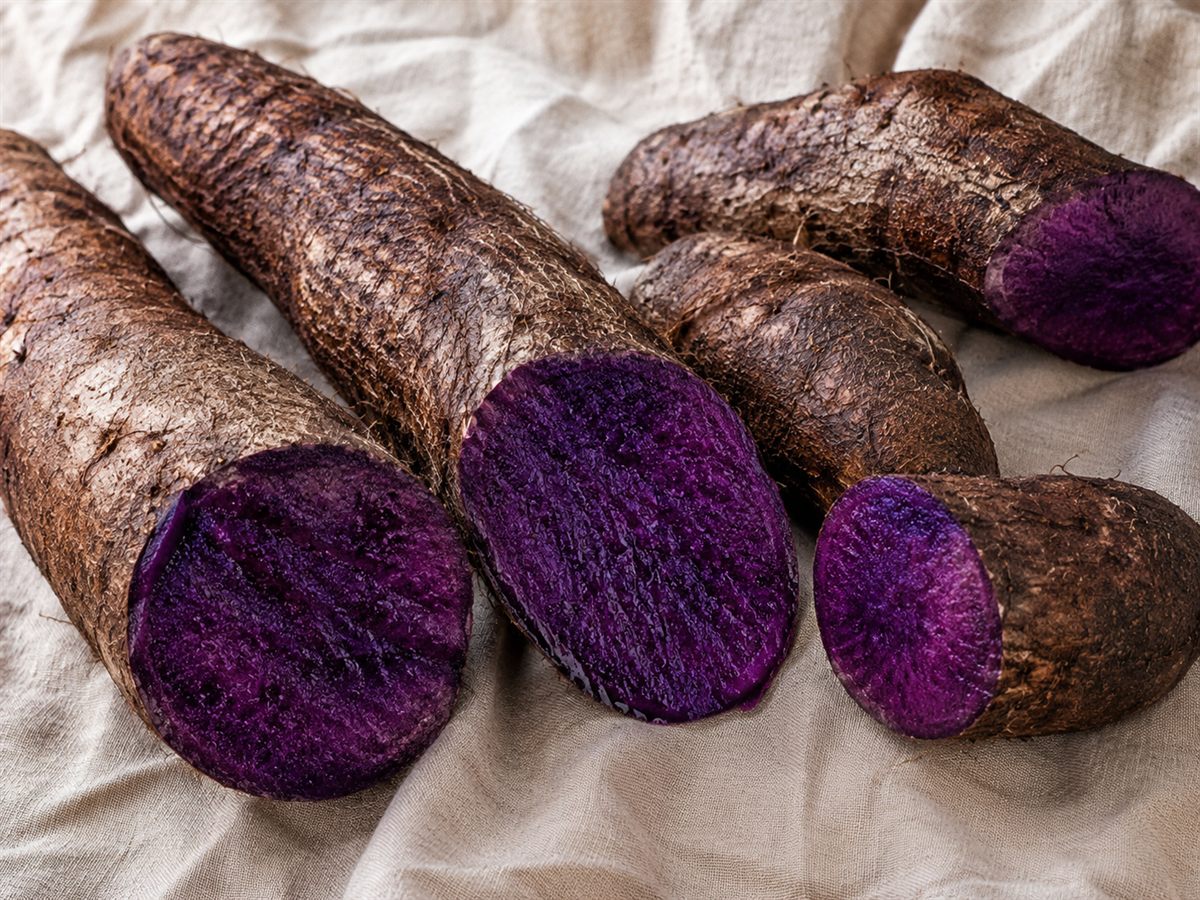
A yam unlike any other
Ube (pronounced "oo-beh") is a purple yam. Botanists call it Dioscorea alata: the tuber of a climbing vine that grows in the tropics.
It's neither a potato, nor a taro, nor a sweet potato. It's a true yam, cousin of those grown in Africa or Asia, but with a signature all its own: flesh of a deep, entirely natural purple.
Rare, still little known in Europe, adored for generations in the Philippines. It's probably this contrast that makes it so precious.
In the Philippines, ube isn't a fad: it's a childhood memory. You find it in birthday cakes, ice creams and halo-halo, the iced dessert of festive days.
Ube in brief
- Name: ube, or purple yam
- Botanical name: Dioscorea alata (yam family)
- Type: tuber of a tropical vine
- Origin: Philippines, home of Kinampay
- Colour: intense purple, 100% natural (anthocyanins)
- Taste: sweet, vanilla, slightly nutty
- Caffeine: none, naturally
 Kinampay, the king variety of Bohol
A treasure born in the Philippines.
There, ube is passed down like a family recipe.
It's been grown in the archipelago for centuries, long before it charmed the world's cafés. The most sought-after variety, Kinampay, is tied to the island of Bohol: an ube renowned for its aroma and deep colour.
It's this variety that we chose for Ube Time.
Neither potato nor taro
It's the most common mix-up. Three roots, often muddled, yet very different.
The purple sweet potato belongs to an entirely different plant family. Taro, for its part, has flesh that's most often white or greyish: its purple tint is usually added. Ube, on the contrary, is naturally purple and sweeter.
Our detailed comparisons: ube or taro and ube or matcha.
A purple that doesn't cheat
Most purple foods owe their colour to a dye. Not ube.
Its tint comes from anthocyanins, those natural pigments found in blueberry, blackberry or red cabbage. Depending on the variety, the purple ranges from soft mauve to deep purple, without ever the slightest additive.
A spoonful of powder is enough to tint a whole latte. Where others add dyes, ube colours on its own, thanks to the plant. All plant-based.
A taste that surprises
You expect a vegetable. You discover a dessert.
Ube is sweet and indulgent, somewhere between vanilla and hazelnut, with a creamy texture once cooked. Rounder than matcha, without its bitterness, and less earthy than taro. A taste you love from the very first sip.
Six reasons to make it yours.
100% natural
A yam, nothing else.
Natural colour
A purple signed by anthocyanins.
Vanilla taste
Soft and round, never bitter.
Ultra-versatile
Drinks, baking, ice cream.
Caffeine-free
To enjoy even in the evening.
Easy to measure
One spoonful is enough.
The ube latte, our signature drink.
Sweet, purple, caffeine-free. The recipe we make with our eyes closed.
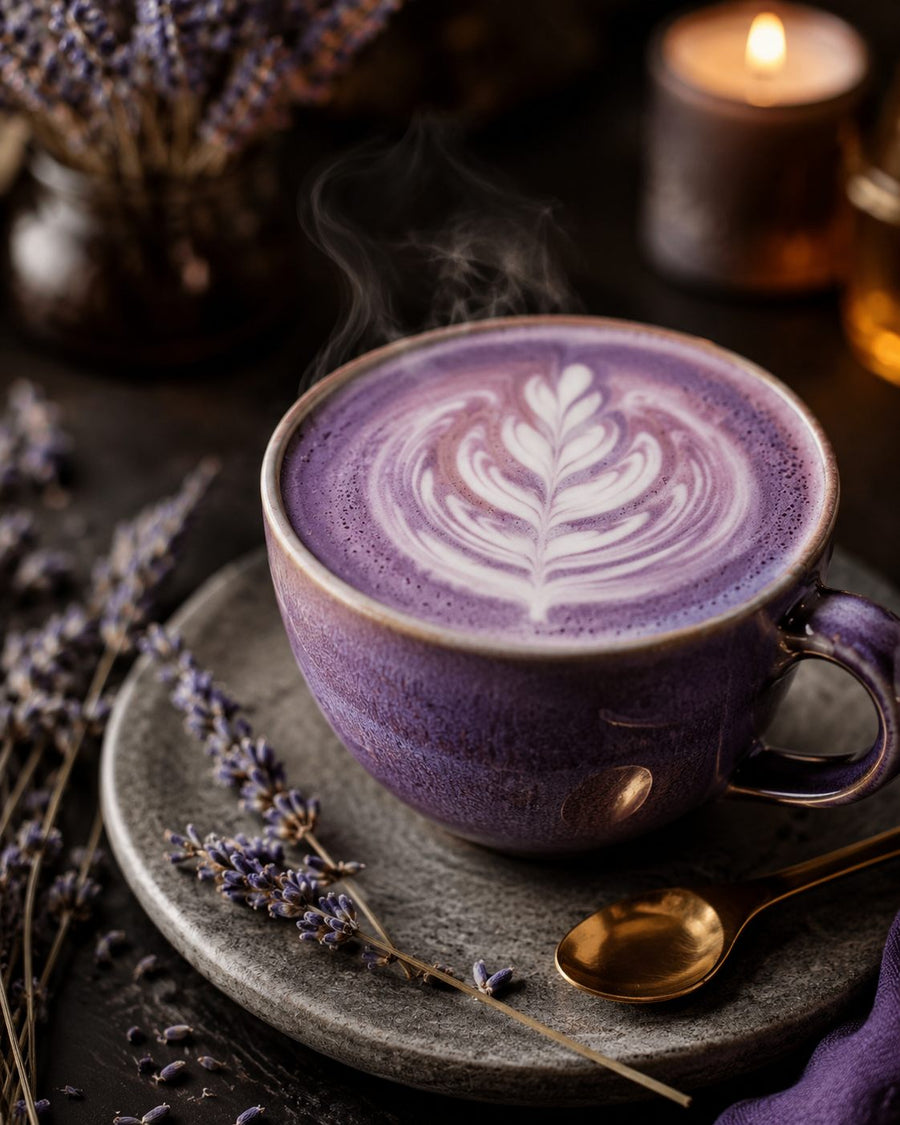
Ingredients (1 cup)
- 1 tsp Kinampay ube powder
- 1 tsp hot water
- 200 ml milk of your choice (oat, almond, cow's…)
- Sweetener to taste (optional)
Preparation
- Pour the ube powder into your cup
- Add the hot water and mix into a smooth paste
- Top up with hot milk (or cold + ice for the iced version)
- Stir, sweeten if needed, and enjoy
Fresh, frozen or powdered?
In the Philippines, ube is cooked fresh. In Europe, that's rarer: the tuber travels poorly and keeps for only a short time.
This is where the powder changes everything. Dried then finely ground, ube keeps its colour and aroma, stores for a long time and is measured by the spoon. The simplest way to find, here, the taste of the Philippines.
Beware of artificially coloured "ube flavour" products. A real ube naturally smells of vanilla and shows a clear purple, never neon.
Ube doesn't stop at the latte
The latte is its showcase, but ube thinks bigger. In baking, it colours and flavours cheesecakes, cookies, creams and homemade ice creams.
Wherever you want sweetness and a spectacular colour, one spoonful is enough.
- Ube is a purple yam (Dioscorea alata) from the Philippines, neither taro nor potato.
- Its colour is 100% natural (anthocyanins), its taste sweet and vanilla.
- It's caffeine-free and can be cooked in drinks as in desserts.
What if you tasted it?
The best way to understand ube is still to taste it.
Your questions about ube.
How do you pronounce "ube"?
It's pronounced "oo-beh". The word comes from the Philippines and means purple yam.
Is ube a fruit or a vegetable?
Ube is a tuber: it's a yam, so a root vegetable, not a fruit.
What's the difference between ube and taro?
They're two different plants. Ube is naturally purple and sweeter; taro is more neutral and its purple colour is often added.
Are ube and purple sweet potato the same?
No. They're two plants from different families, with distinct tastes and textures.
What does ube taste like?
A sweet, indulgent taste, close to vanilla and hazelnut, with a creamy texture once cooked.
Does ube contain caffeine?
No, ube is naturally caffeine-free: it can be enjoyed any time, even in the evening.
Why is ube purple?
Thanks to anthocyanins, natural pigments also found in blueberry or red cabbage. No added dye.
Where can you buy quality ube powder?
At Ube Time, we offer a Kinampay-variety ube powder, fine and naturally fragrant.