Ube in Filipino culture
In the Philippines, ube is as much a symbol as an ingredient. Celebrations, family transmission, national pride: here is the cultural dimension of the purple yam, and a gateway to its great specialties.
More than a food, a symbol
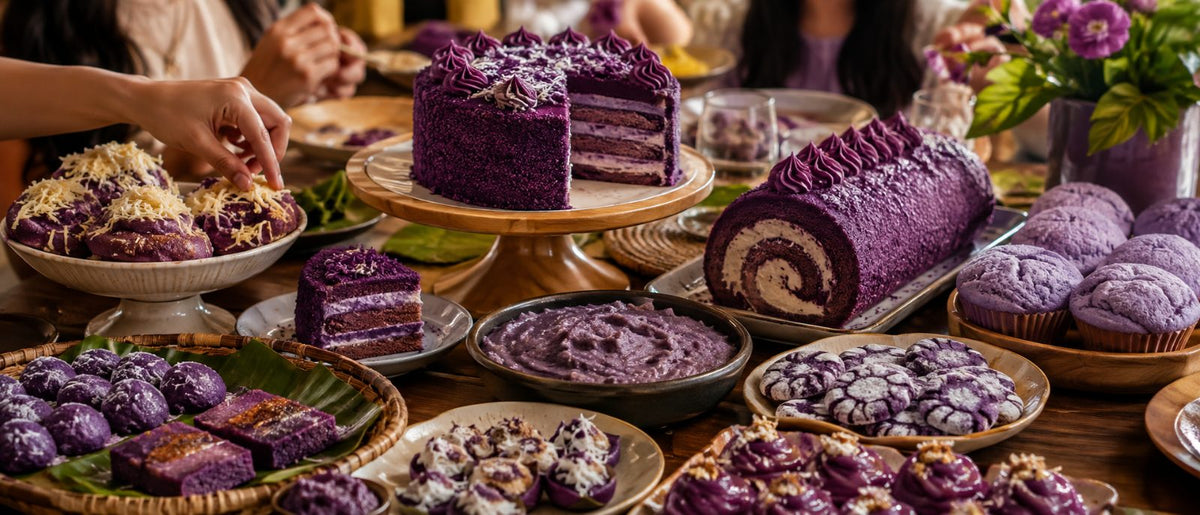
In the Philippines, ube goes far beyond the status of an ingredient. Its purple colour, generous and joyful, makes it an emblem of celebration and sharing. Seeing it on a table often heralds a happy moment. It carries a share of pride: that of a local product turned global icon.
Many Filipinos associate ube with childhood memories and family celebrations. It's a deeply emotional taste.
Cooking and transmission
Ube is cooked as a family, and its recipes are passed down from generation to generation. Every household has its version of halaya, its knack for breads and desserts. This transmission, often oral, makes ube a thread that links generations and, with the diaspora, continents.
Cooking ube isn't just making a dessert: it's carrying on a tradition and sharing a heritage.
From yesterday to today
Ube culture isn't frozen: it reinvents itself. Traditional desserts today inspire modern creations, in coffee shops and patisseries the world over. The ube latte, cheesecakes and purple pastries carry on, in their own way, a heritage generations old.
To connect tradition and modernity, try a classic dessert like ube halaya, then a current creation like the ube latte. Same root, two pleasures.
Explore Filipino specialties
This tradition is tasted through a multitude of specialties. Dive into each of them:
- Filipino ube desserts, the full overview.
- Ube halaya, the emblematic jam.
- Halo-halo, the festive iced dessert.
- Ube breads and pastries, from ensaymada to pandesal.
- Ube in modern cuisine, between tradition and trend.
- Ube is a symbol of celebration, sharing and pride.
- Its recipes are passed down in families and through the diaspora.
- The tradition reinvents itself in modern pastry.
See the history of ube, ube in the Philippines, or all our recipes.
A culture, to savour.
Our 100% Kinampay ube powder opens the door to Filipino tradition for you. It's yours to explore its flavours, from the most classic to the most modern.
Your questions: ube and Filipino culture.
Why is ube important in Filipino culture?
Because it goes beyond the status of an ingredient: a symbol of celebration and sharing, it's tied to family memories and a national pride.
How are ube recipes passed down?
As a family, from generation to generation, often orally. The diaspora has carried this transmission beyond the Philippines.
Is the ube tradition evolving?
Yes. Traditional desserts inspire modern creations, like the ube latte or cheesecakes, in coffee shops the world over.
What are the great Filipino ube specialties?
Ube halaya, halo-halo, breads and pastries like ensaymada and pandesal, and many modern creations.
Where to start to discover this culture?
With ube halaya, the emblematic jam and base of many desserts, then halo-halo, the festive iced dessert.