Fresh ube and powder in recipes
A recipe calls for fresh ube, but you only have powder? No worries. Here's how to swap one for the other, with the right conversions and the adjustments to plan for.
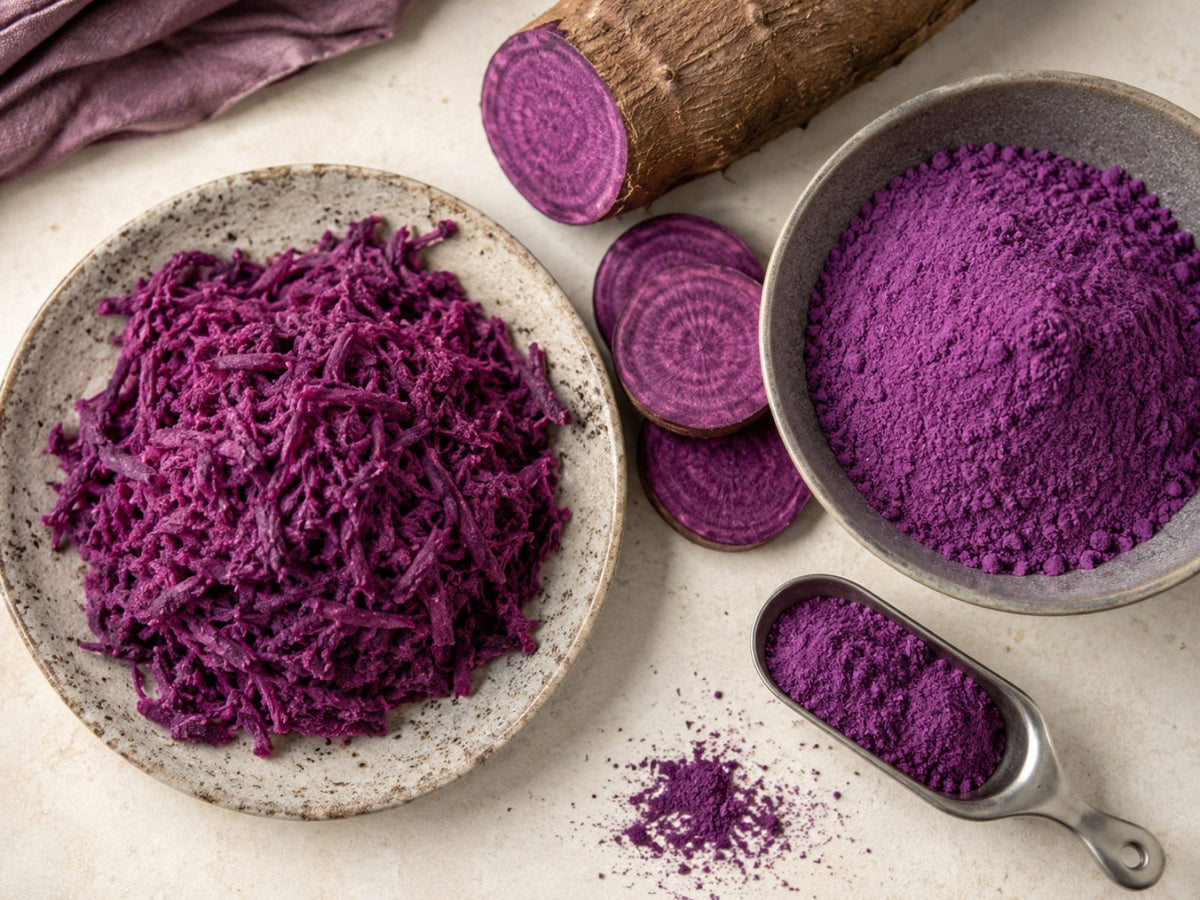
Two forms, one flavour
Powder is simply fresh ube, dried and ground. So you can replace fresh with powder in most recipes, as long as you manage one thing: the water. Fresh ube contains a lot of it, powder almost none. So you need to rehydrate the powder or adjust the recipe's liquids.
For colour alone, no need to rehydrate: a spoonful of powder is enough to tint a batter or a cream, without changing the texture.
Fresh to powder: the table.
| Case | Powder equivalent | Adjustment |
|---|---|---|
| 100 g of fresh purée | 2 to 3 tbsp of powder | + 40 to 60 ml of water |
| For colour alone | 1 to 2 tsp | Without rehydrating |
| Drink (latte) | 1 to 2 tsp | Directly in the milk |
| Cake, loaf cake | 2 to 3 tbsp | Reduce a liquid or rehydrate |
Powder equivalent
Adjustment
The method, step by step
Rehydrate: mix the powder with a little warm water until you get a paste, then fold it in as you would with fresh purée. Or adjust: keep the powder dry and remove a little liquid elsewhere in the recipe (milk, water). Taste and look: adjust the dose to get back the expected taste and colour.
In a cake, the simplest solution is to rehydrate the powder into a smooth paste before adding it to the wet ingredients. The texture stays true to the original recipe.
The limits to know
Powder replaces fresh very well for taste and colour. However, it doesn't bring the same volume or the same moisture as a purée: in a recipe that relies heavily on the texture of fresh ube, you need to compensate with a little liquid or substance. Nothing complicated, just an adjustment.
- Powder replaces fresh in most recipes.
- The key point: manage the water (rehydrate or reduce a liquid).
- For colour alone, no need to rehydrate.
- Compensate a purée's volume with a little liquid if needed.
See fresh ube, powder, paste and purée, the doses, or ube powder in cooking.
From fresh to powder, no worries.
Our 100% ube Kinampay powder replaces fresh ube in your recipes, with the advantage of precise dosing and long shelf life.
Your questions: fresh or powder in recipes.
Can you replace fresh ube with powder?
Yes, in most recipes. Just manage the water: rehydrate the powder into a paste, or reduce a liquid in the recipe to compensate.
How much powder to replace fresh purée?
Count about 2 to 3 tablespoons of powder plus a little water to replace 100 g of fresh purée. Adjust to taste and colour.
Do you need to rehydrate the powder?
To replace purée in a cake, yes: mix it with a little warm water. For colour alone or a drink, no, it dissolves directly.
Does the powder change a recipe's texture?
It brings less volume and moisture than a fresh purée. Compensate with a little liquid if the recipe relies heavily on the texture of the ube.
Is the taste the same with the powder?
Yes, powder is dried ube: the taste stays true. Just adjust the dose to get the intensity you want.