Ube Bibingka
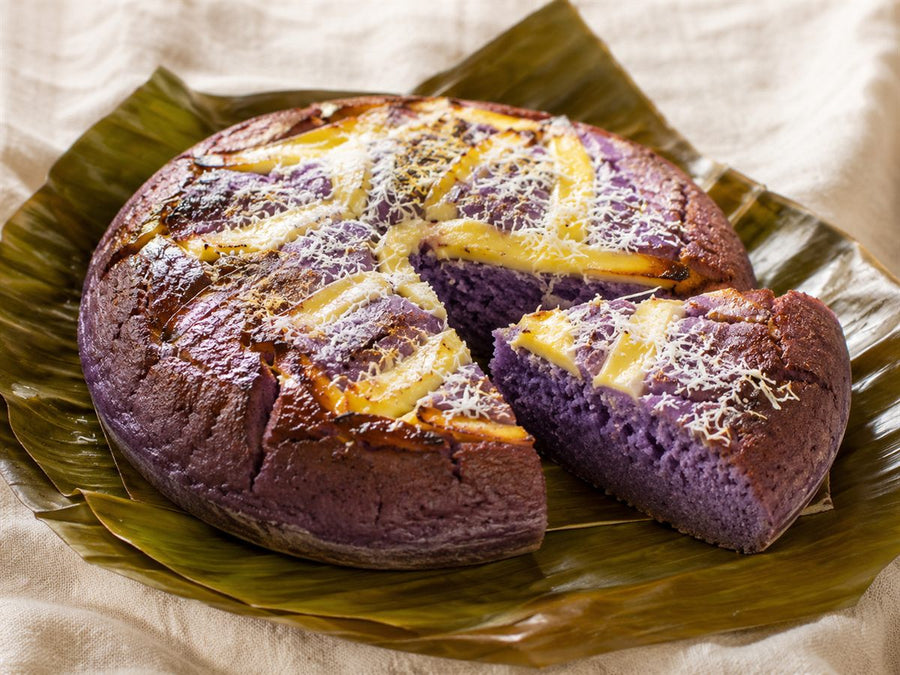
Soft, slightly spongy, scented with coconut and topped with melting cheese: bibingka is the rice cake of Filipino festivities.
The ube version gives it a purple crumb and extra sweetness.
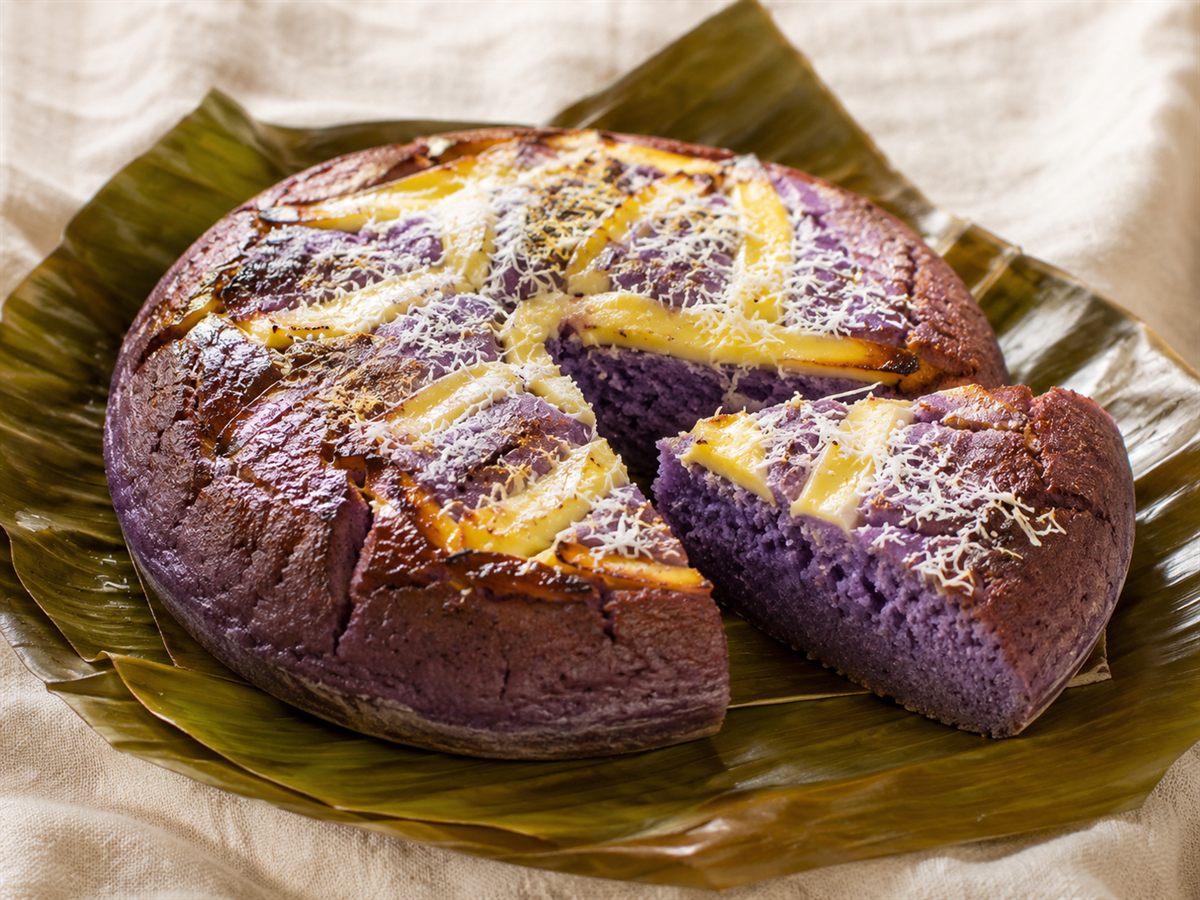
The year-end holiday cake
Bibingka is inseparable from the Christmas season in the Philippines, traditionally baked in banana leaves over embers.
Its texture, between cake and rice flan, is soft and slightly springy. Coconut milk soaks through it, cheese and butter crown it. Ube makes it a purple, tender and festive version.
Bibingka is enjoyed after the Simbang Gabi, the dawn masses of Advent, sold hot outside the churches. A true Christmas ritual.
Ube Bibingka, step by step.
The Filipino tradition with ube, step by step.
Ingredients
- 200 g rice flour
- 150 g sugar
- 2 eggs
- 200 ml coconut milk
- 1 tbsp baking powder
- 2 tbsp Kinampay ube powder (approx. 20 g)
- Topping: butter, grated cheese, coconut
Equipment
- A baking dish (ideally lined with a banana leaf)
- A mixing bowl and a whisk
Preparation
- Whisk the eggs with the sugar, then add the coconut milk.
- Stir in the rice flour, baking powder and ube powder, until the batter is smooth.
- Pour into the dish lined with baking paper and bake 25 minutes at 180 °C, until the centre is set.
- Top with melted butter, grated cheese and coconut, then return to the oven for 5 more minutes.
The whole Filipino recipes family
Halaya, pandesal, bibingka: the Filipino classics with ube, from one recipe to the next.
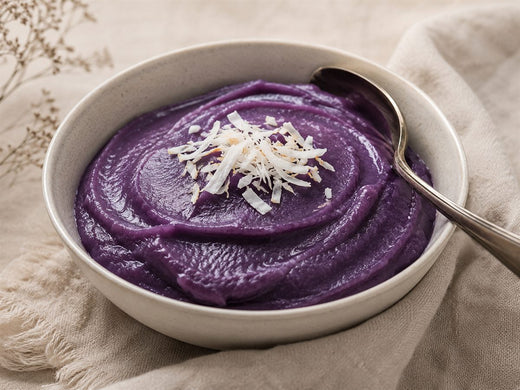
Ube Halaya
Ube jam, the queen of the Philippines.
See the recipe →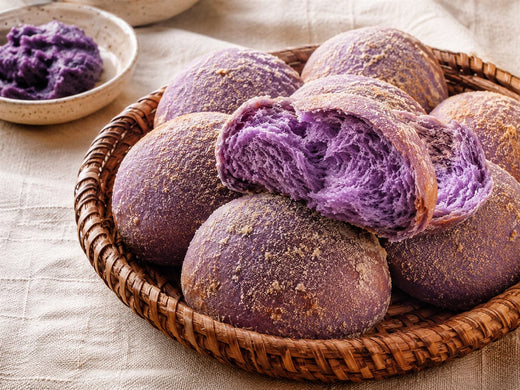
Ube Pandesal
The Filipino bread roll, purple version.
See the recipe →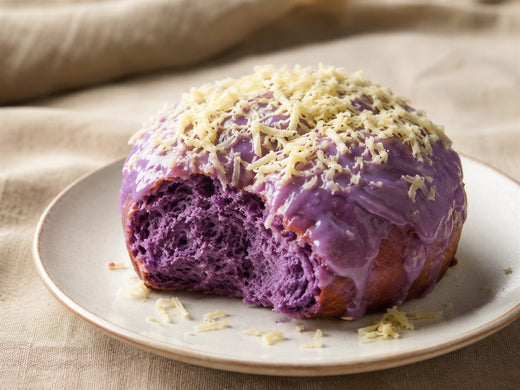
Ube Ensaymada
The soft brioche with butter and cheese.
See the recipe →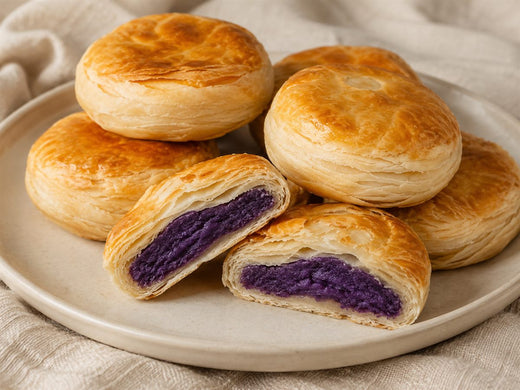
Ube Hopia
The flaky pastry filled with ube.
See the recipe →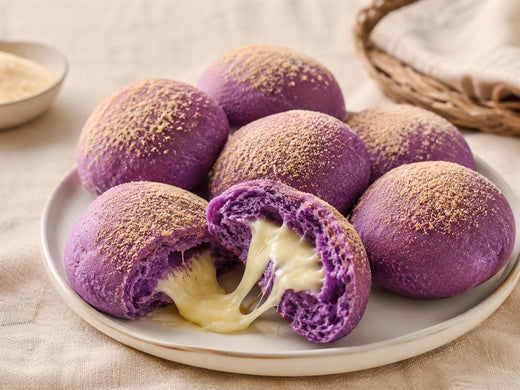
Ube Cheese Pandesal
The purple pandesal filled with cheese.
See the recipe →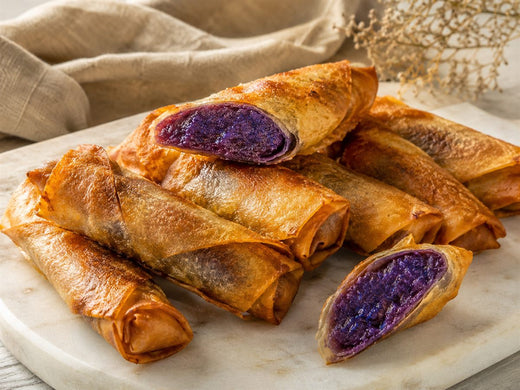
Ube Turon
The crispy fried and caramelised roll.
See the recipe →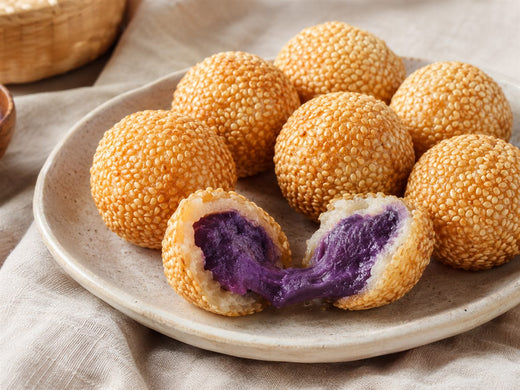
Ube Buchi
The sesame balls filled with ube.
See the recipe →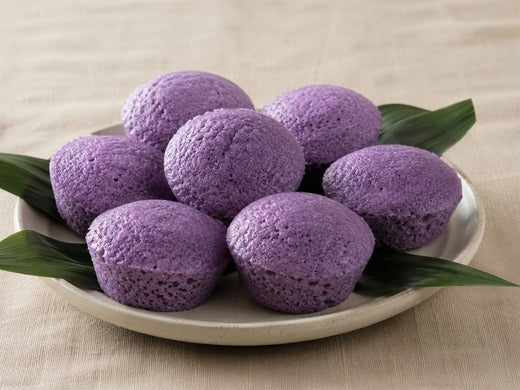
Ube Puto
The soft little steamed cake.
See the recipe →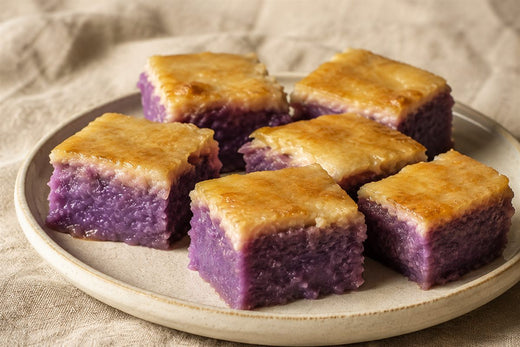
Ube Cassava Cake
The soft cassava and coconut cake.
See the recipe →The chef’s touch
The texture of bibingka is unique, halfway between cake and flan.
Don’t overbake it: the centre should stay soft and slightly moist. The banana leaf, if you can find one, delicately scents the batter, but a simple buttered baking paper does the job. The salty cheese on top is the finishing touch.
Serve it warm: that’s the temperature at which the soft-cheese contrast is at its most delicious.
Mistakes to avoid
Three pitfalls for a soft bibingka.
Explore the world of ube
The Philippines are just one facet: explore the whole purple world.
Drinks
Lattes, smoothies, ube frappés.
Explore →Capsules
Lattes, cappuccino, affogato… ready in 30 s.
Explore →Desserts
Cheesecakes, cookies, cakes, pancakes.
Explore →Ice creams
Ice creams, nice cream, frozen mochi.
Explore →Breakfasts
Bowls, porridges, overnight oats.
Explore →Filipino recipes
Halaya, ensaymada, leche flan.
Explore →Ube Time Signatures
Our exclusive creations, found nowhere else.
Explore →Fancy this festive cake?
All you need is Kinampay ube powder.
Your questions about this recipe.
How do you make an ube bibingka?
Mix rice flour, sugar, eggs, coconut milk and ube powder, bake 25 minutes at 180 °C, then top with butter, cheese and coconut and return to the oven.
What is bibingka?
A soft Filipino coconut rice cake, traditionally baked in banana leaves during the Christmas season.
Does ube bibingka contain caffeine?
No, ube is naturally caffeine-free.
Do you need a banana leaf?
It scents the batter nicely, but buttered baking paper works perfectly well.
Can it be made gluten-free?
Rice flour is naturally gluten-free; just check the baking powder you use.