Ube Puto
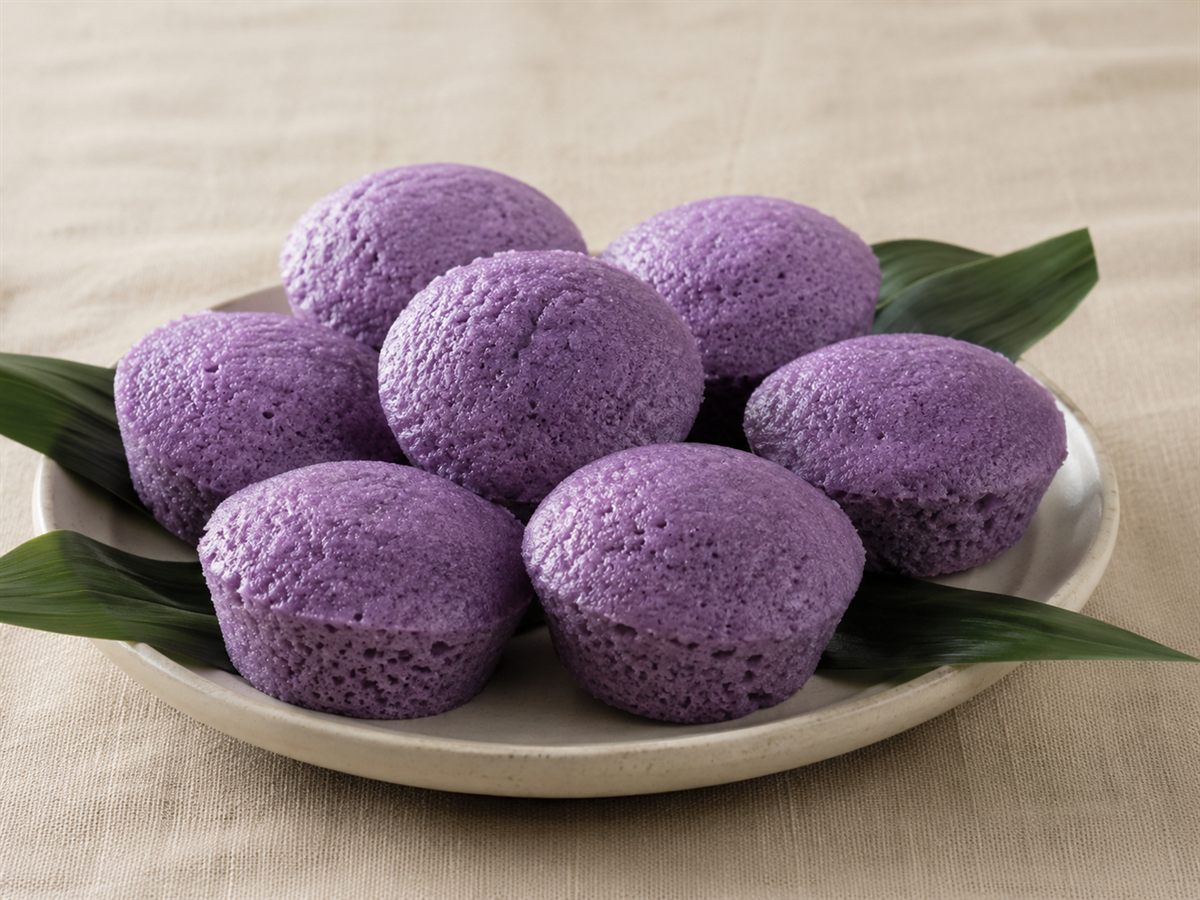
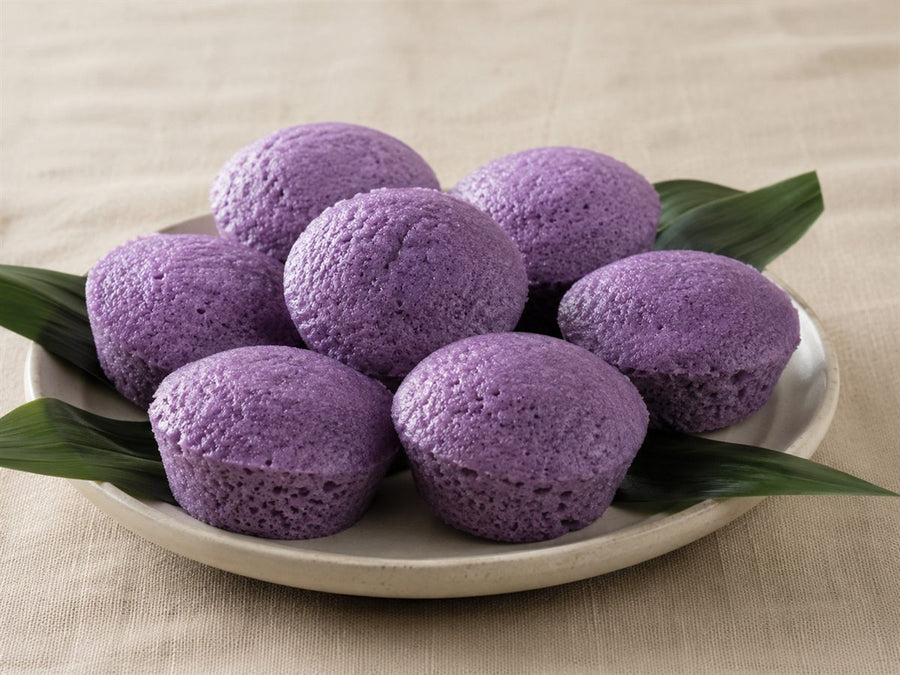
Soft, tender, slightly spongy and a gentle purple: the puto is the little steamed cake that accompanies a thousand occasions in the Philippines.
Light and no-bake, it's enjoyed at any hour.
The little cake that goes with everything
The puto is a steamed rice cake, not too sweet, with a light, springy texture.
It's served at breakfast, as a snack, alongside savoury dishes like dinuguan, or simply with a coffee. The ube version gives it colour and sweetness while keeping its lightness. A small, unpretentious pleasure, but always there.
The puto comes in endless variations in the Philippines and pairs just as well with sweet as with savoury, often served alongside stews.
Ube Puto, step by step.
The Filipino tradition with ube, step by step.
Ingredients
- 200 g rice flour
- 120 g sugar
- 1 tbsp baking powder
- 200 ml coconut milk
- 1 egg
- 2 tbsp Kinampay ube powder (about 20 g)
Equipment
- A steamer
- Small moulds (puto or silicone)
- A whisk
Preparation
- Whisk the egg with the sugar, then add the coconut milk.
- Stir in the rice flour, the baking powder and the ube powder, until a smooth, fluid batter.
- Fill the small moulds three-quarters full.
- Steam for 12 to 15 minutes, until a skewer comes out clean. Leave to cool before unmoulding.
The whole Filipino recipes family
Halaya, pandesal, bibingka: the Filipino classics with ube, from one recipe to the next.
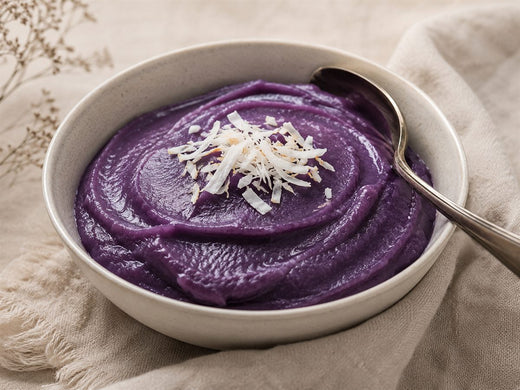
Ube Halaya
The ube jam, queen of the Philippines.
Discover the recipe →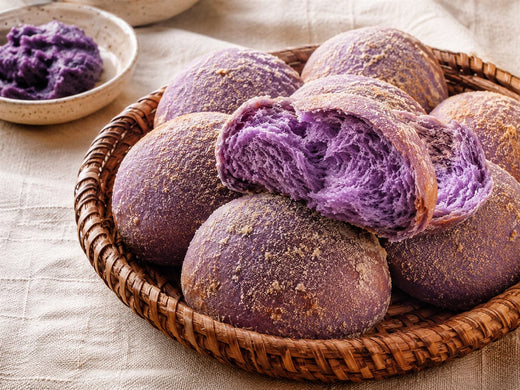
Ube Pandesal
The Filipino bread roll, in a purple version.
Discover the recipe →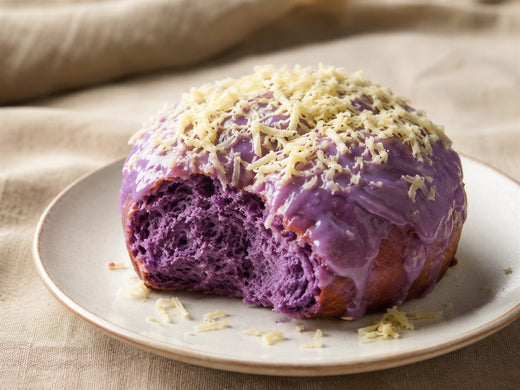
Ube Ensaymada
The soft brioche with butter and cheese.
Discover the recipe →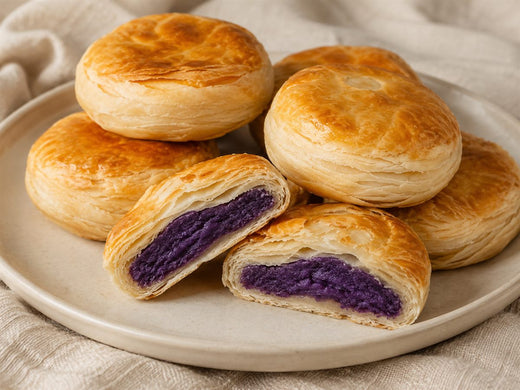
Ube Hopia
The flaky pastry filled with ube.
Discover the recipe →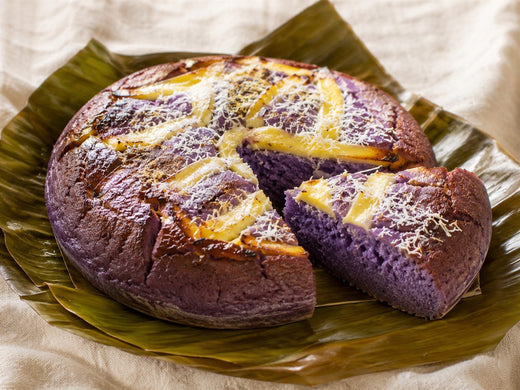
Ube Bibingka
The soft rice cake with coconut.
Discover the recipe →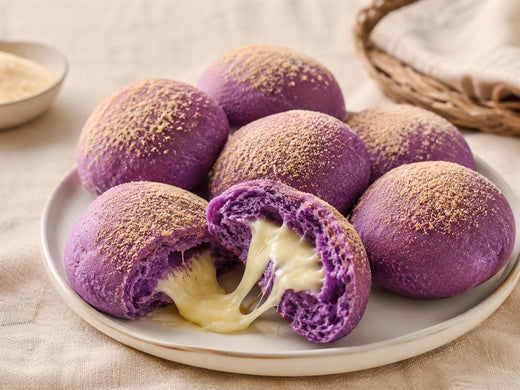
Ube Cheese Pandesal
The purple pandesal filled with cheese.
Discover the recipe →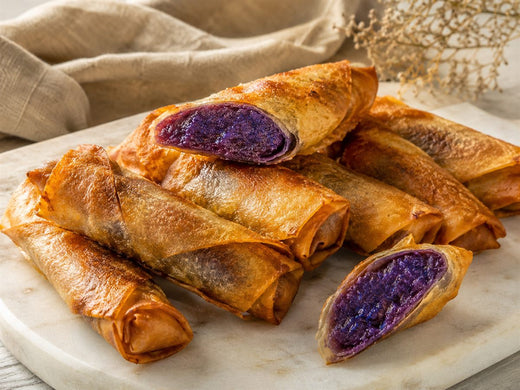
Ube Turon
The crispy fried, caramelised roll.
Discover the recipe →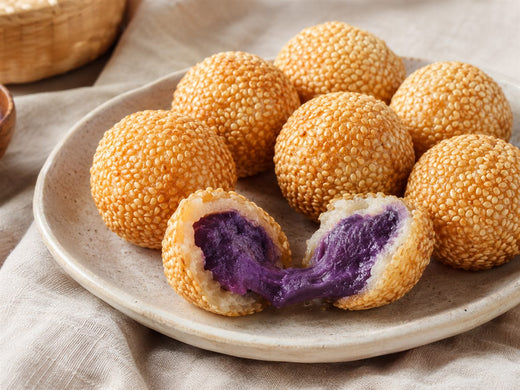
Ube Buchi
The sesame balls filled with ube.
Discover the recipe →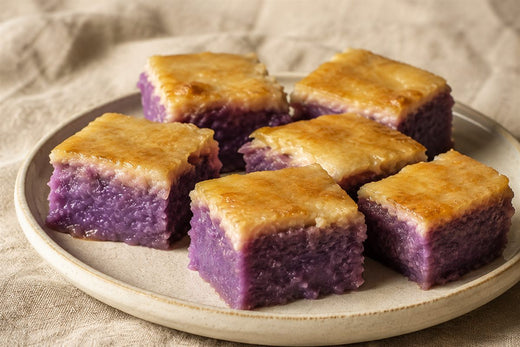
Ube Cassava Cake
The melting cassava cake with coconut.
Discover the recipe →The chef's touch
Controlled steam gives well-risen puto.
Cover the steamer lid with a cloth to stop water drops falling back onto the cakes. Don't overfill the moulds, the batter rises. A nice fluid batter gives the characteristic light, springy texture.
Place a small piece of cheese on top before steaming for a sweet-savoury version, typically Filipino.
The mistakes to avoid
Three pitfalls for soft puto.
Explore the world of ube
The Philippines are only one facet: explore the whole purple universe.
Drinks
Lattes, smoothies, ube frappés.
Explore →Capsules
Lattes, cappuccino, affogato… ready in 30 s.
Explore →Desserts
Cheesecakes, cookies, cakes, pancakes.
Explore →Ice creams
Ice creams, nice cream, frozen mochi.
Explore →Breakfasts
Bowls, porridges, overnight oats.
Explore →Filipino recipes
Halaya, ensaymada, leche flan.
Explore →Ube Time Signatures
Our exclusive creations, found nowhere else.
Explore →Fancy these steamed cakes?
All you need is Kinampay ube powder.
Your questions about this recipe.
How do you make ube puto?
Mix rice flour, sugar, baking powder, coconut milk, egg and ube powder into a fluid batter, fill small moulds and steam for 12 to 15 minutes.
What is puto?
A little Filipino steamed rice cake, light and soft, served sweet or alongside savoury dishes.
Does ube puto contain caffeine?
No, ube is naturally caffeine-free.
Do you need a special mould?
Small puto moulds are ideal, but silicone or mini-muffin moulds work too.
Is puto gluten-free?
Rice flour is gluten-free; just check the baking powder you use.