Ube Hopia
A thin, flaky crust that crackles, a soft, sweet purple centre: ube hopia is an irresistible little pocket pastry.
A classic of Filipino bakeries, well worth making at home.
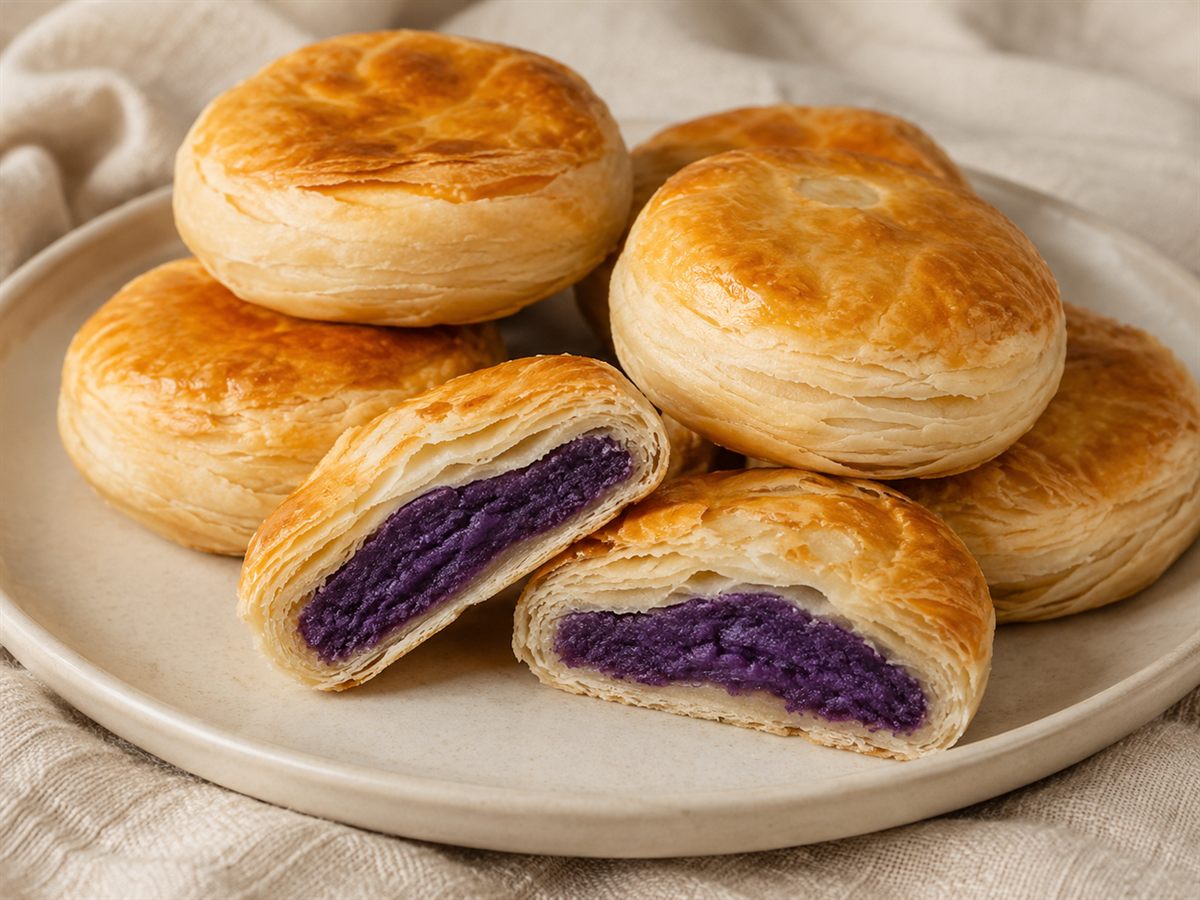
The little pocket pastry
Hopia, of Chinese-Filipino origin, is a filled flaky pastry, sold by panaderias all over the country.
Its thin, layered crust wraps a generous filling, here a soft, fragrant ube paste. Small and portable, it slips into a pocket and is enjoyed at any hour. A quiet treasure of sweet street food.
Hopia is a legacy of the Chinese community in the Philippines: its name comes from Hokkien and means “good pastry”.
Ube Hopia, step by step.
The Filipino ube tradition, step by step.
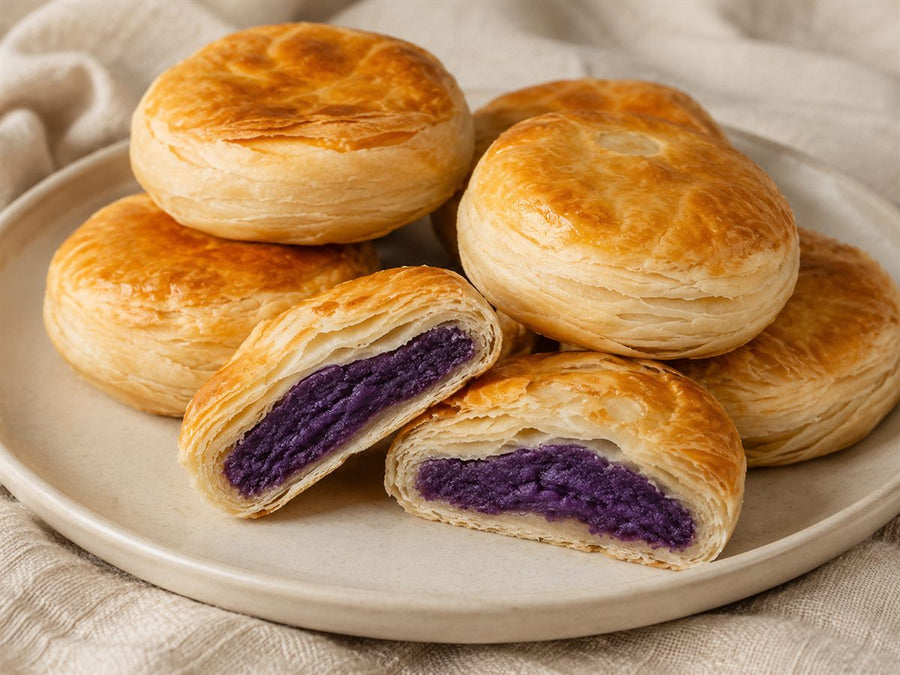
Ingredients
- 1 sheet of puff pastry (or 2 homemade layered doughs)
- 250 g ube halaya (see recipe) or thick ube paste
- 1 egg yolk for glazing
- A little flour
Equipment
- A rolling pin
- A baking tray
- A pastry brush
Method
- Cut the pastry into squares and place a spoonful of ube halaya in the centre of each.
- Fold the pastry around the filling, seal the edges well and flatten slightly into a disc.
- Place on the tray, seam down, and glaze the top with egg yolk.
- Bake for 25 minutes at 180 °C, until the hopia are golden and flaky. Let them cool a little.
The whole Filipino recipes family
Halaya, pandesal, bibingka: the Filipino ube classics, one recipe after another.
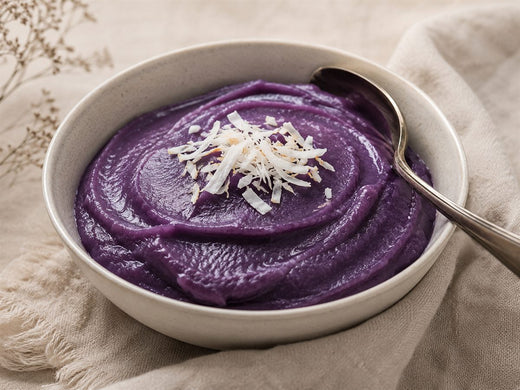
Ube Halaya
The ube jam, queen of the Philippines.
Discover the recipe →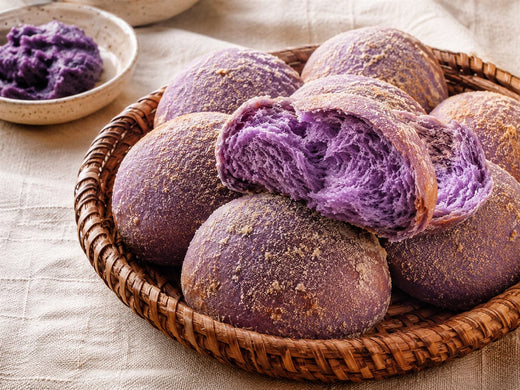
Ube Pandesal
The Filipino bread roll, purple edition.
Discover the recipe →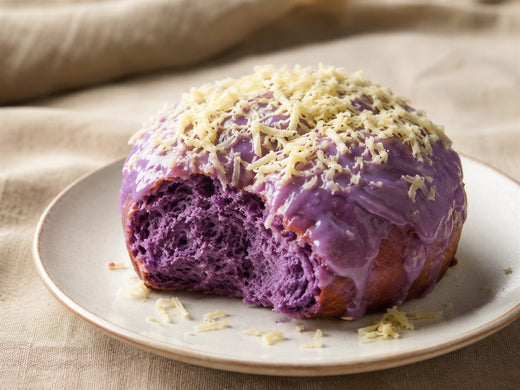
Ube Ensaymada
The soft brioche with butter and cheese.
Discover the recipe →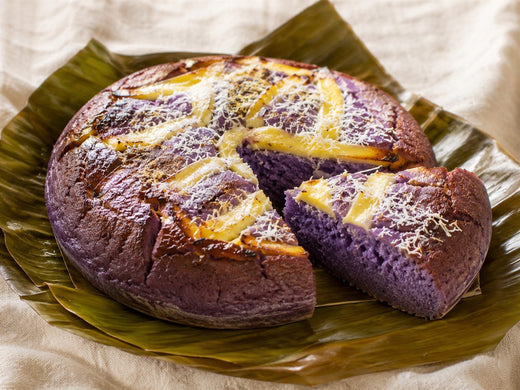
Ube Bibingka
The soft coconut rice cake.
Discover the recipe →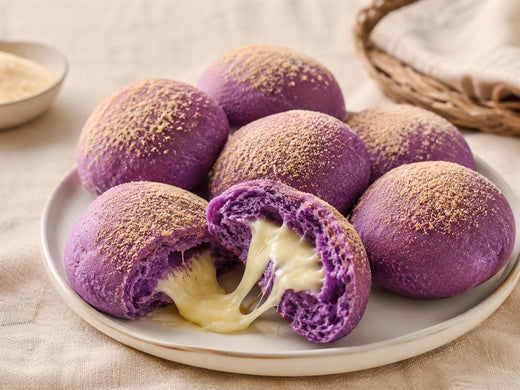
Ube Cheese Pandesal
The purple pandesal filled with cheese.
Discover the recipe →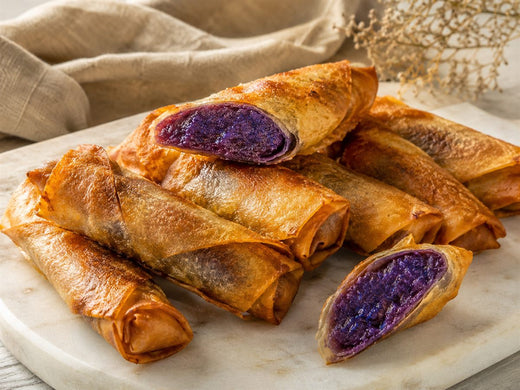
Ube Turon
The crunchy fried, caramelised roll.
Discover the recipe →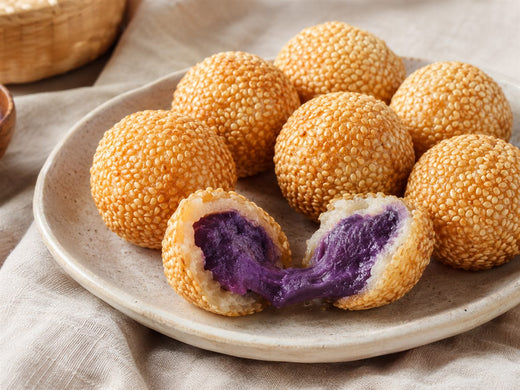
Ube Buchi
The sesame balls filled with ube.
Discover the recipe →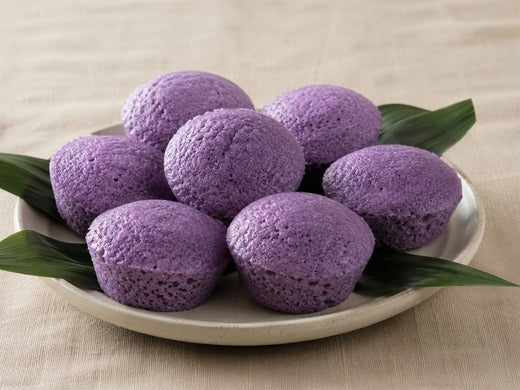
Ube Puto
The soft little steamed cake.
Discover the recipe →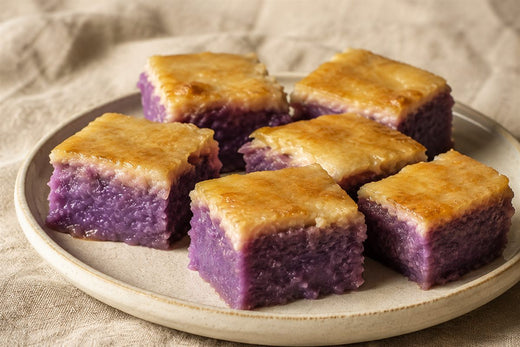
Ube Cassava Cake
The rich cassava and coconut cake.
Discover the recipe →The chef's touch
Two things make the perfect hopia.
Seal the edges really well: filling that escapes burns on the tray. Use a nice thick halaya, not too moist, for a soft centre that won't make the pastry soggy. A careful glaze gives that appetising shine.
Make your ube halaya the day before: nicely cold and firm, it's much easier to shape.
Mistakes to avoid
Three pitfalls for nicely flaky hopia.
Explore the world of ube
The Philippines are just one facet: explore the whole purple universe.
Drinks
Lattes, smoothies, ube frappés.
Explore →Capsules
Lattes, cappuccino, affogato… ready in 30 s.
Explore →Desserts
Cheesecakes, cookies, cakes, pancakes.
Explore →Ice creams
Ice creams, nice cream, frozen mochi.
Explore →Breakfasts
Bowls, porridges, overnight oats.
Explore →Filipino recipes
Halaya, ensaymada, leche flan.
Explore →Ube Time Signatures
Our exclusive creations, found nowhere else.
Explore →Craving these purple pastries?
All you need is Kinampay ube powder for the filling.
Your questions about this recipe.
How do you make ube hopia?
Fill squares of puff pastry with ube halaya, fold them into discs, glaze with egg yolk and bake for 25 minutes at 180 °C.
What is hopia?
A small filled flaky pastry of Chinese-Filipino origin, sold in bakeries across the Philippines.
Do ube hopia contain caffeine?
No, ube is naturally caffeine-free.
What can you use instead of ube halaya?
A thick ube paste (ube powder cooked with condensed milk), if you do not have ready-made halaya.
How do you store them?
2 to 3 days in an airtight box; a quick spell in the oven brings back their crunch.