Ube Pandesal
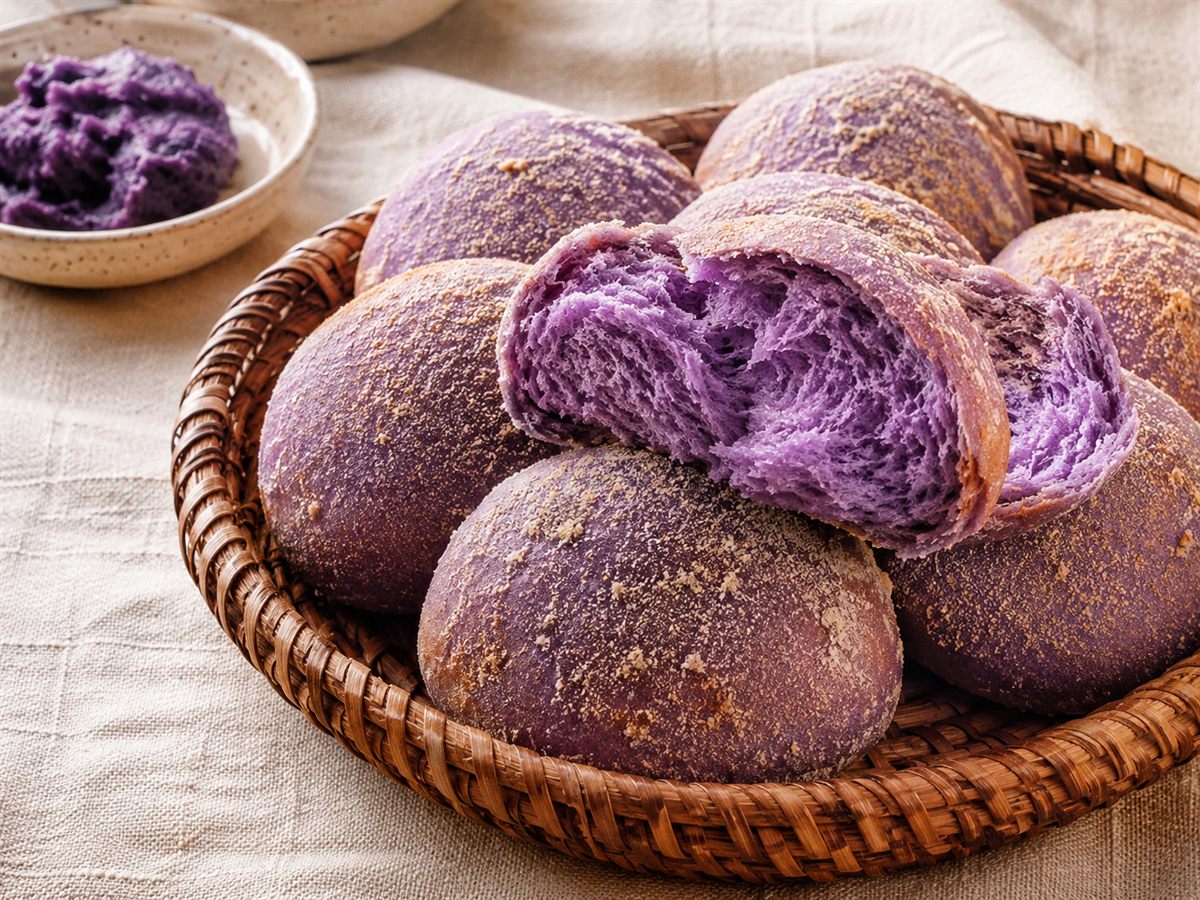
Soft, lightly sweet, crowned with its fine golden breadcrumbs: pandesal is the everyday little bread of the Philippines.
In its ube version, it takes on an irresistible purple hue and a vanilla sweetness that fills the kitchen.
The bread of every morning
Pandesal is the bread you buy warm at the bakery, at dawn, all across the archipelago.
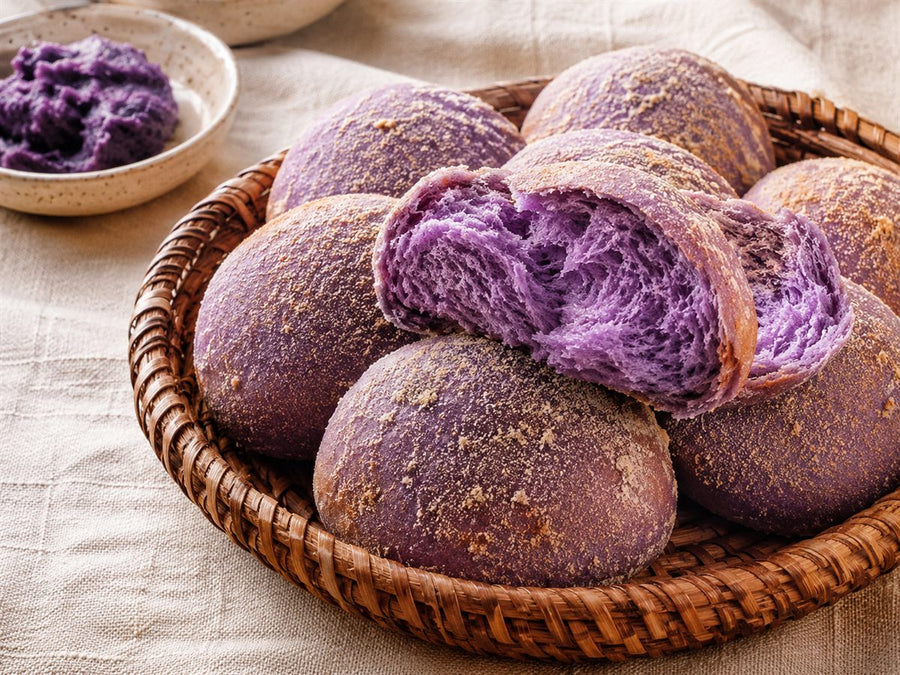
Soft and lightly sweet, rolled in fine breadcrumbs, it is eaten plain, filled with cheese or spread with halaya. The ube version makes it a tender, purple bread, as beautiful as it is comforting.
Pandesal comes from the Spanish « pan de sal », salt bread. It is the emblematic breakfast of the Philippines, dipped in a coffee or a hot chocolate.
Ube Pandesal, step by step.
The Filipino tradition with ube, step by step.
Ingredients
- 300 g flour
- 1 sachet of baker's yeast
- 40 g sugar
- 1 egg
- 120 ml warm milk
- 40 g soft butter
- 1 tbsp Kinampay ube powder (approx. 10 g)
- Fine breadcrumbs for coating
Equipment
- A mixing bowl
- A clean tea towel
- A baking tray
Method
- Mix the flour, yeast, sugar and ube powder. Add the egg, the warm milk and the butter, then knead into a supple dough.
- Cover and leave to prove for 1 hour, until the dough doubles in size.
- Shape into balls, roll them in the breadcrumbs and arrange them on the tray.
- Leave to prove for 30 minutes, then bake for 15 minutes at 180°C, until golden and risen.
The whole Filipino recipes family
Halaya, pandesal, bibingka: the Filipino classics with ube, from one recipe to the next.
Ube Halaya
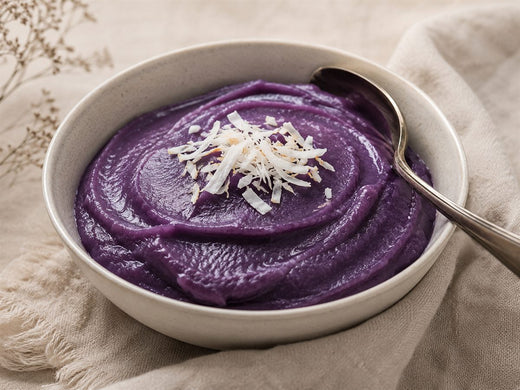
Ube jam, the queen of the Philippines.
Discover the recipe →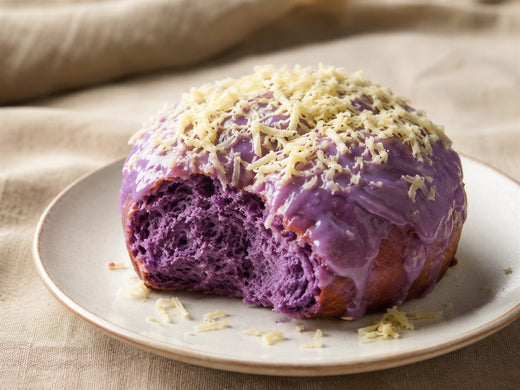
Ube Ensaymada
The soft brioche with butter and cheese.
Discover the recipe →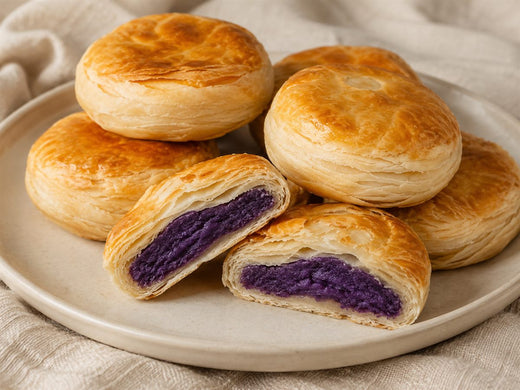
Ube Hopia
The flaky pastry filled with ube.
Discover the recipe →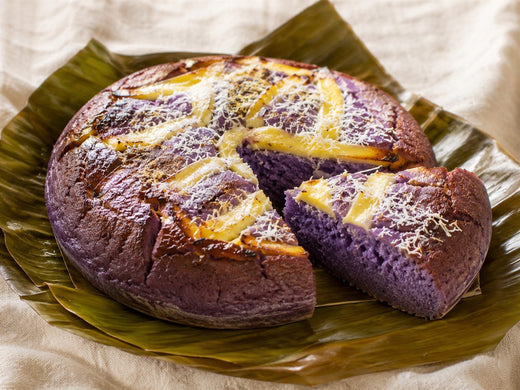
Ube Bibingka
The soft rice and coconut cake.
Discover the recipe →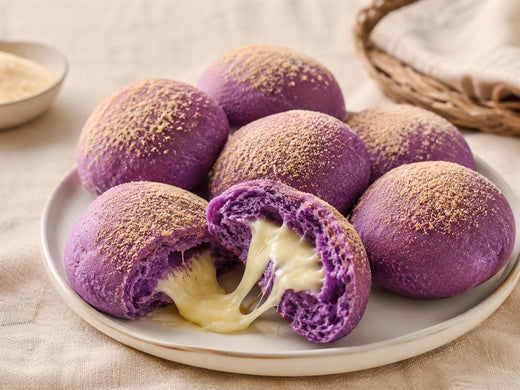
Ube Cheese Pandesal
The purple pandesal filled with cheese.
Discover the recipe →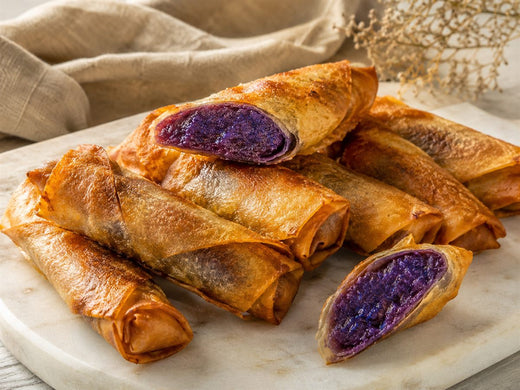
Ube Turon
The crisp fried, caramelised roll.
Discover the recipe →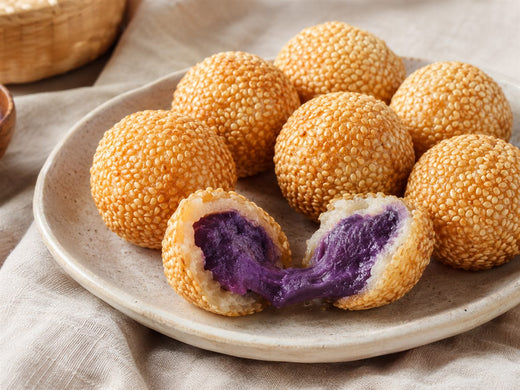
Ube Buchi
Sesame balls filled with ube.
Discover the recipe →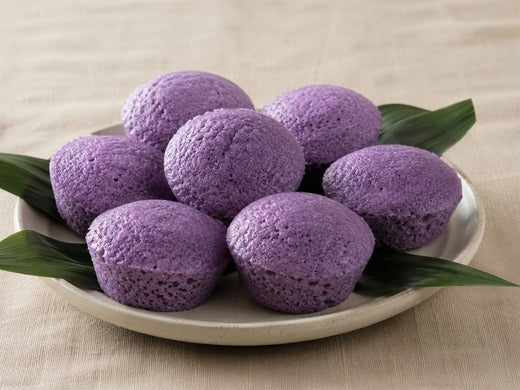
Ube Puto
The soft little steamed cake.
Discover the recipe →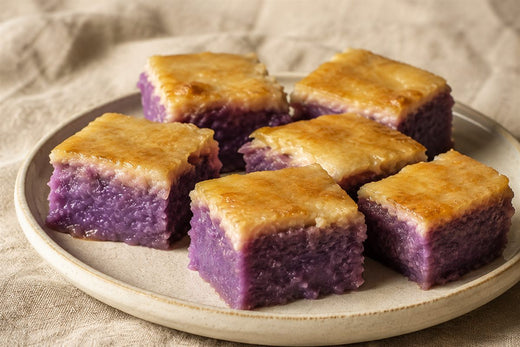
Ube Cassava Cake
The melting cassava and coconut cake.
Discover the recipe →The chef's touch
The softness comes from the proving.
Use warm milk, never hot, so as not to kill the yeast, and let the dough double in a warm spot. Enough kneading makes the crumb stretchy and tender. The breadcrumbs go onto balls that are still slightly damp so they stick well.
Serve them warm, spread with ube halaya: the ube-on-ube pairing is pure Filipino bliss.
The mistakes to avoid
Three pitfalls for soft pandesal.
Explore the world of ube
The Philippines are only one facet: explore the whole purple universe.
Drinks
Lattes, smoothies, ube frappés.
Explore →Capsules
Lattes, cappuccino, affogato… ready in 30 s.
Explore →Desserts
Cheesecakes, cookies, cakes, pancakes.
Explore →Ice creams
Ice creams, nice cream, frozen mochi.
Explore →Breakfasts
Bowls, porridges, overnight oats.
Explore →Filipino recipes
Halaya, ensaymada, leche flan.
Explore →Ube Time Signatures
Our exclusive creations, found nowhere else.
Explore →Fancy these purple breads?
All you need is Kinampay ube powder.
Your questions about this recipe.
How do you make ube pandesal?
Make a yeasted dough with ube powder, let it prove, shape balls rolled in breadcrumbs, let them prove again, then bake for 15 minutes at 180°C.
What is pandesal?
It is the soft, lightly sweet bread roll of the Philippines, the breakfast bread, rolled in fine breadcrumbs.
Do ube pandesal contain caffeine?
No, ube is naturally caffeine-free.
Can you fill them?
Yes: they are delicious filled with cheese or spread with ube halaya.
How do you keep them soft?
In a sealed bag for 2 days; reheat them for a few seconds to bring back the softness.