Ube Halaya
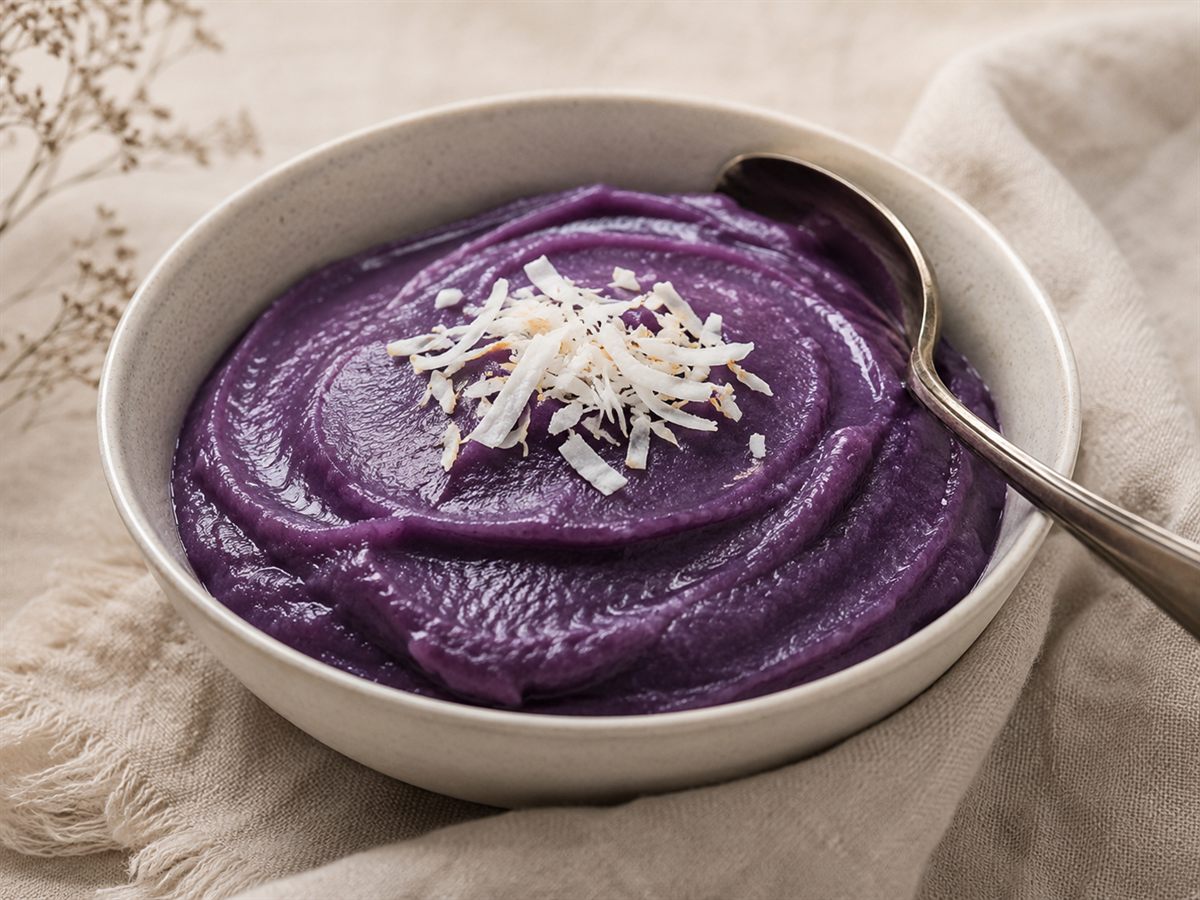
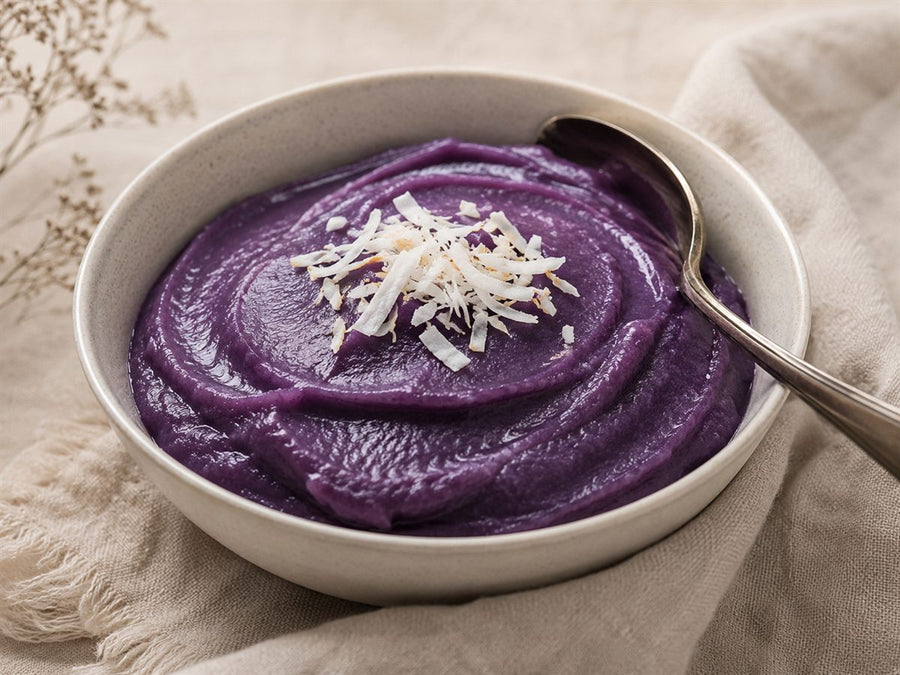
Thick, glossy, a sumptuous purple: ube halaya is THE preparation that made ube a star in the Philippines.
This ube jam is eaten by the spoonful, spread on brioches and used to fill countless desserts.
The queen of ube preparations
In the Philippines, ube halaya is a must at celebrations and family tables.
It's served on its own, spread on bread, and used to fill pandesal, hopia and ice creams. It's the purest and most intense form of ube, where its vanilla sweetness is lifted by coconut milk and condensed milk. The base of almost the entire Filipino world of sweets.
Halaya comes from “halayà”, meaning jam. It's traditionally given as a gift at celebrations, presented in a llanera, that small oval tin mould.
Ube Halaya, step by step.
The Filipino ube tradition, step by step.
Ingredients
- 60 g Kinampay ube powder (about 6 tbsp)
- 400 ml sweetened condensed milk
- 200 ml coconut milk
- 50 g butter
- 1 tsp vanilla extract
Equipment
- A wide pan or a heavy-bottomed saucepan
- A wooden spatula
- A mould (ideally a llanera)
Method
- Whisk the ube powder with the coconut milk into a smooth, lump-free paste.
- Add the condensed milk and pour everything into the pan.
- Cook over low heat, stirring constantly, for 20 to 25 minutes, until the paste thickens and pulls away from the sides.
- Stir in the butter and vanilla, mix, then pour into the buttered mould.
- Let it cool and set in the fridge before serving.
The whole Filipino recipes family
Halaya, pandesal, bibingka: the Filipino ube classics, one recipe after another.
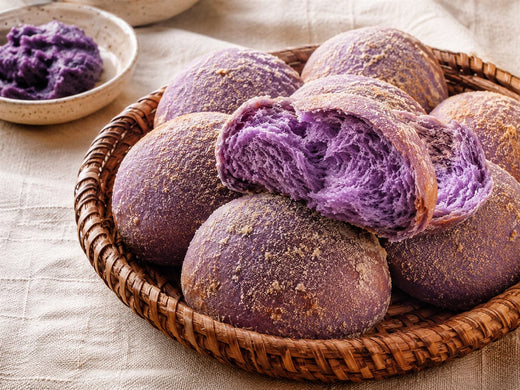
Ube Pandesal
The Filipino bread roll, purple edition.
Discover the recipe →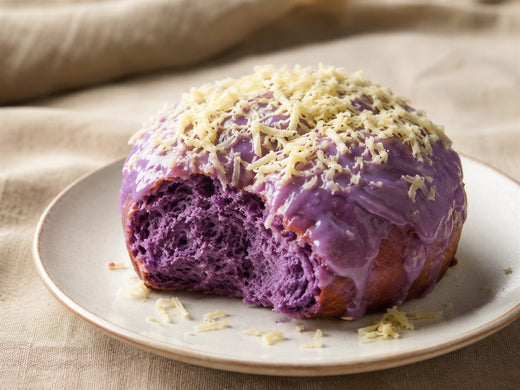
Ube Ensaymada
The soft brioche with butter and cheese.
Discover the recipe →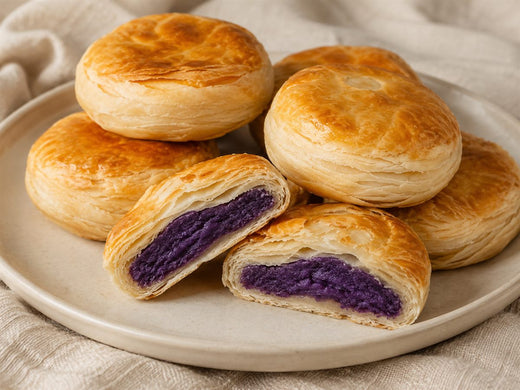
Ube Hopia
The flaky pastry filled with ube.
Discover the recipe →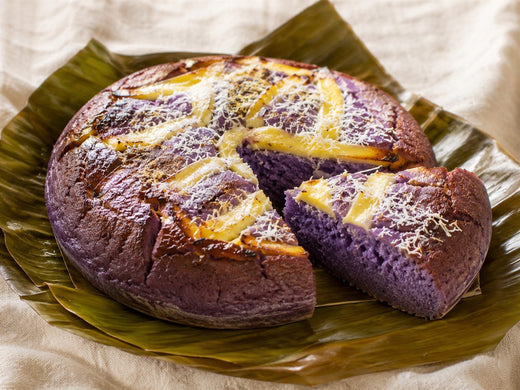
Ube Bibingka
The soft coconut rice cake.
Discover the recipe →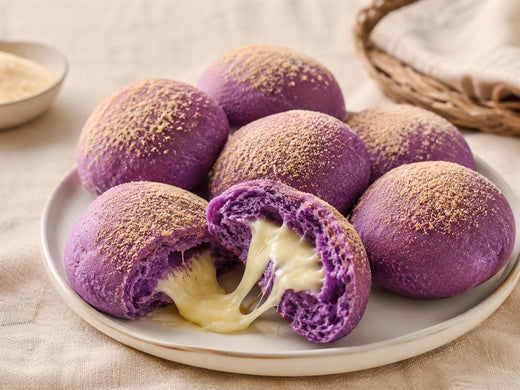
Ube Cheese Pandesal
The purple pandesal filled with cheese.
Discover the recipe →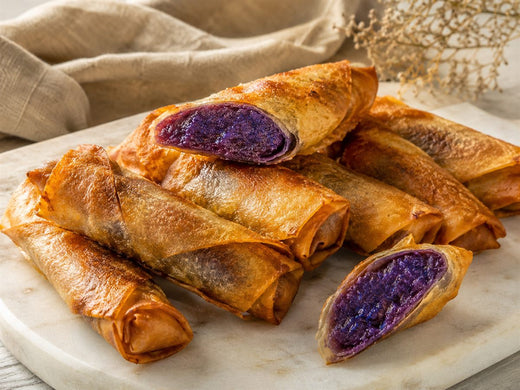
Ube Turon
The crunchy fried, caramelised roll.
Discover the recipe →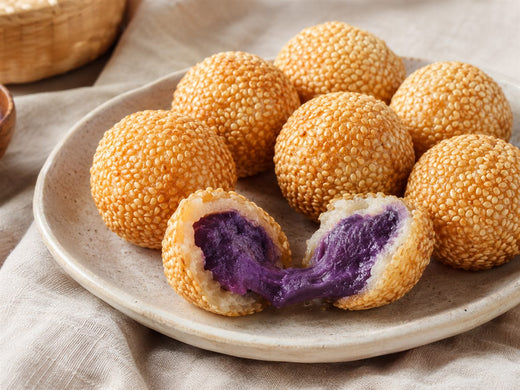
Ube Buchi
The sesame balls filled with ube.
Discover the recipe →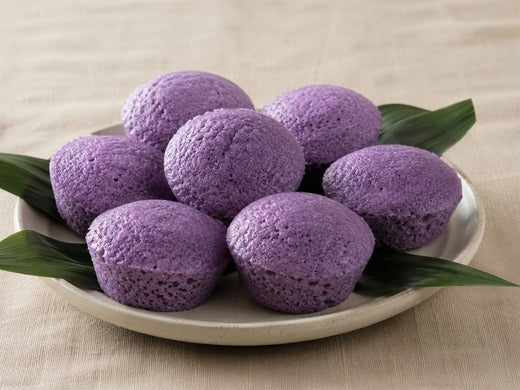
Ube Puto
The soft little steamed cake.
Discover the recipe →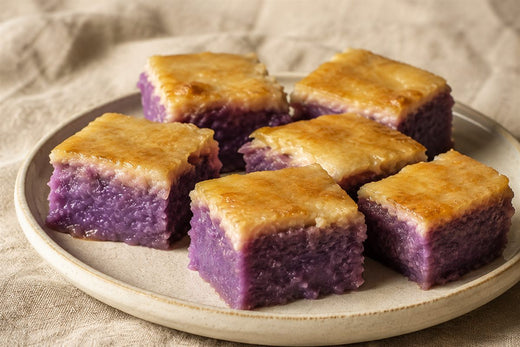
Ube Cassava Cake
The rich cassava and coconut cake.
Discover the recipe →The chef's touch
Patience is the only real secret.
Stir without stopping, over low heat: halaya catches on the bottom very quickly. It's ready when the spatula leaves a clean trail that closes back slowly. The longer you cook it, the denser and more jam-like it becomes.
Always keep a jar of halaya in the fridge: it's the base for ube ice cream, filled pandesal and a thousand desserts.
Mistakes to avoid
Three pitfalls for a smooth, glossy halaya.
Explore the world of ube
The Philippines are just one facet: explore the whole purple universe.
Drinks
Lattes, smoothies, ube frappés.
Explore →Capsules
Lattes, cappuccino, affogato… ready in 30 s.
Explore →Desserts
Cheesecakes, cookies, cakes, pancakes.
Explore →Ice creams
Ice creams, nice cream, frozen mochi.
Explore →Breakfasts
Bowls, porridges, overnight oats.
Explore →Filipino recipes
Halaya, ensaymada, leche flan.
Explore →Ube Time Signatures
Our exclusive creations, found nowhere else.
Explore →Craving this purple jam?
All you need is Kinampay ube powder for the colour and the sweetness.
Your questions about this recipe.
How do you make ube halaya?
Dissolve ube powder in coconut milk, add condensed milk, then cook over low heat, stirring, for 20 to 25 minutes until you get a thick paste; finish with butter.
What is ube halaya used for?
To eat on its own, to spread, and to fill ice creams, pandesal, hopia and many Filipino desserts.
Does ube halaya contain caffeine?
No, ube is naturally caffeine-free.
How long does halaya keep?
Up to a week in the fridge in a sealed jar, and it freezes very well.
Can you make it vegan?
Yes: swap the condensed milk for coconut condensed milk and the butter for coconut oil.