Ube Buchi
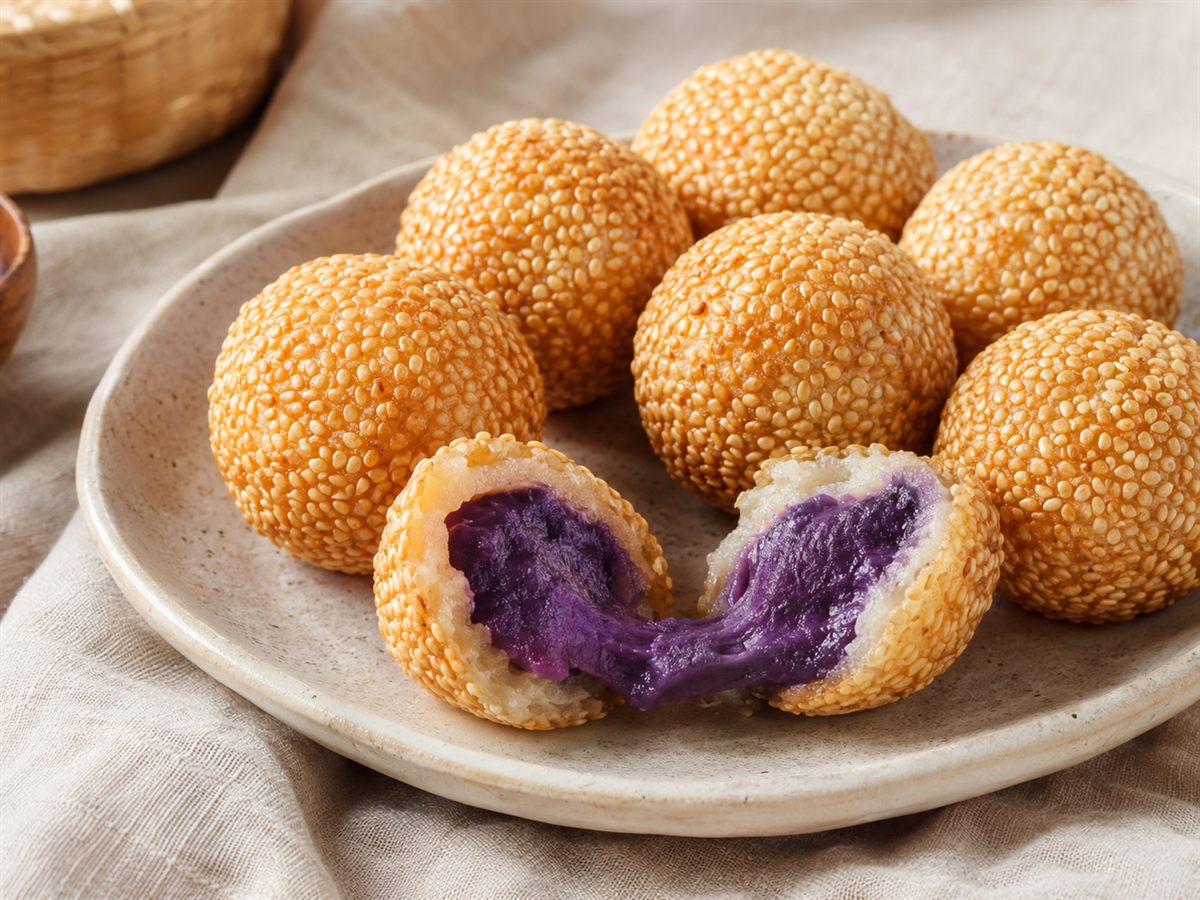
Crispy and golden on the outside, soft and chewy inside, with a purple ube heart: buchi are irresistible little sesame balls.
A comforting Chinese-Filipino classic.
The little ball that rolls
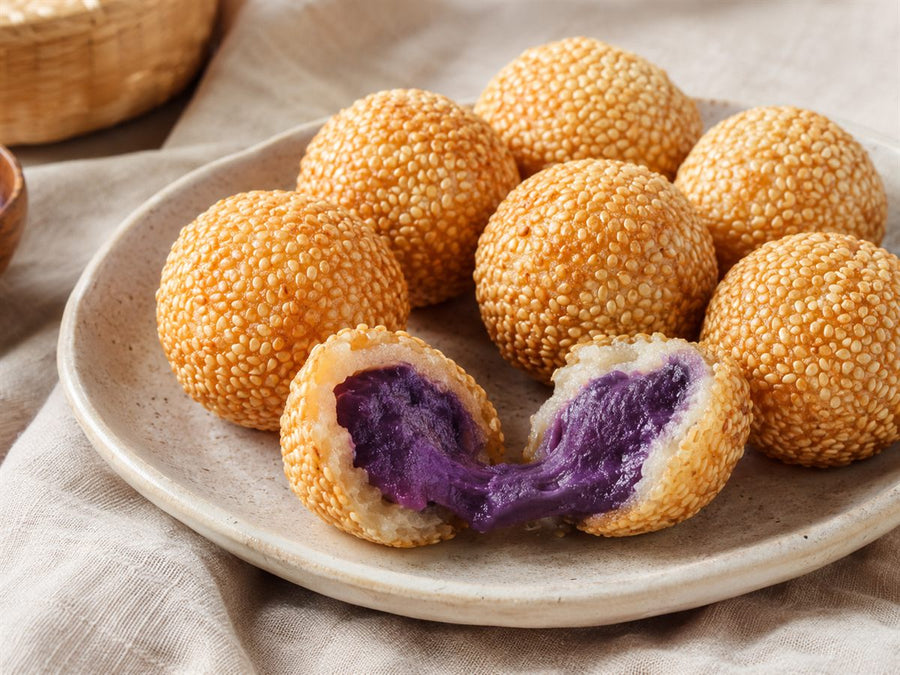
Buchi (or butsi) are balls of glutinous rice flour, filled, coated in sesame seeds and fried.
Their texture is unique: the crunch of the sesame, the chewy softness of the rice dough, the melting ube heart. Inherited from the Chinese tradition, they have become a must of Filipino snacks. You eat them hot, one by one, unable to stop.
Buchi often accompany dim sum in Chinese-Filipino restaurants, but are also sold as street food, piping hot.
Ube Buchi, step by step.
The Filipino tradition with ube, step by step.
Ingredients
- 200 g glutinous rice flour
- 120 ml warm water
- 2 tbsp sugar
- 150 g ube halaya (for the filling)
- Sesame seeds
- Oil for frying
Equipment
- A mixing bowl
- A saucepan for frying
- A slotted spoon
Preparation
- Mix the glutinous rice flour, sugar and warm water until you have a supple, non-sticky dough.
- Form balls, flatten them, place a little ube halaya in the centre and seal carefully.
- Roll each ball in the sesame seeds, pressing so they stick.
- Fry over medium heat, stirring, until the buchi puff up and turn golden, then drain.
The whole Filipino recipes family
Halaya, pandesal, bibingka: the Filipino classics with ube, from one recipe to the next.
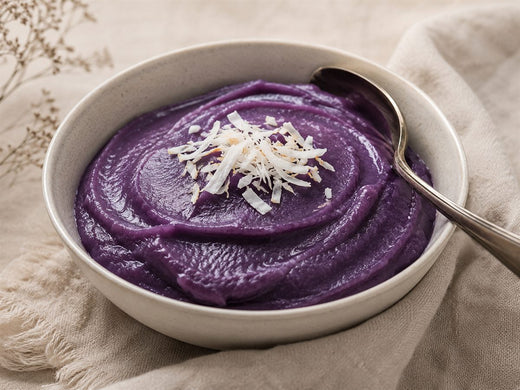
Ube Halaya
Ube jam, the queen of the Philippines.
See the recipe →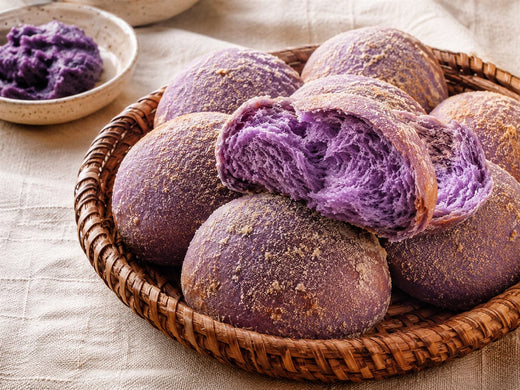
Ube Pandesal
The Filipino bread roll, purple version.
See the recipe →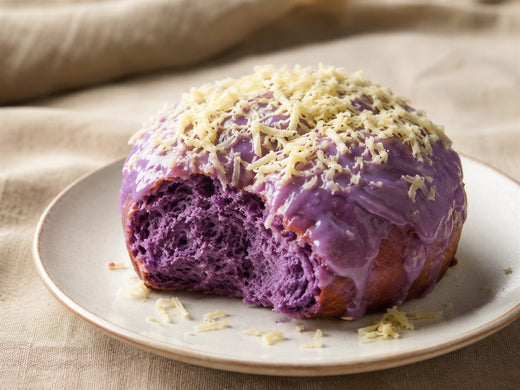
Ube Ensaymada
The soft brioche with butter and cheese.
See the recipe →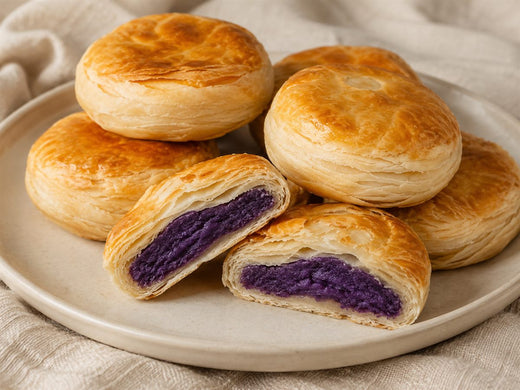
Ube Hopia
The flaky pastry filled with ube.
See the recipe →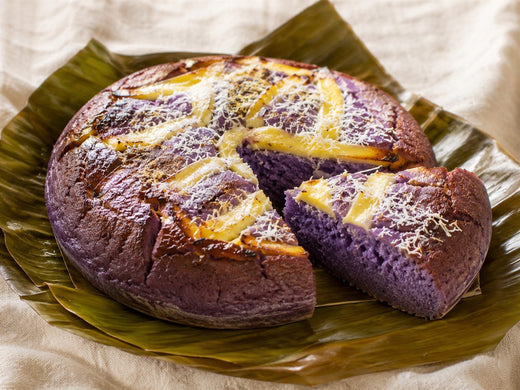
Ube Bibingka
The soft coconut rice cake.
See the recipe →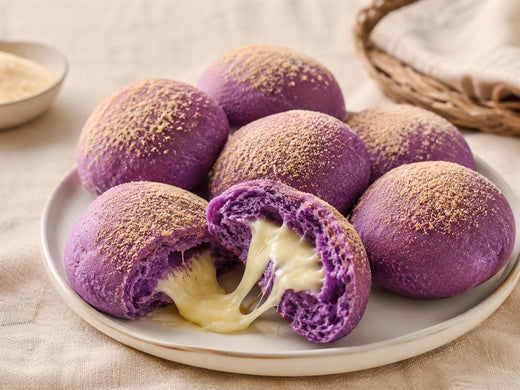
Ube Cheese Pandesal
The purple pandesal filled with cheese.
See the recipe →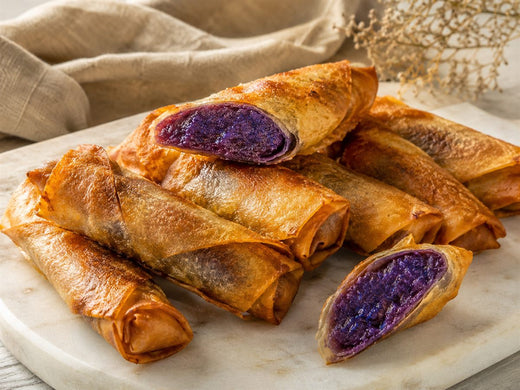
Ube Turon
The crispy fried and caramelised roll.
See the recipe →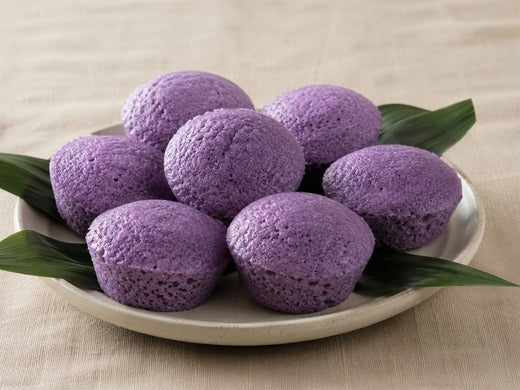
Ube Puto
The soft little steamed cake.
See the recipe →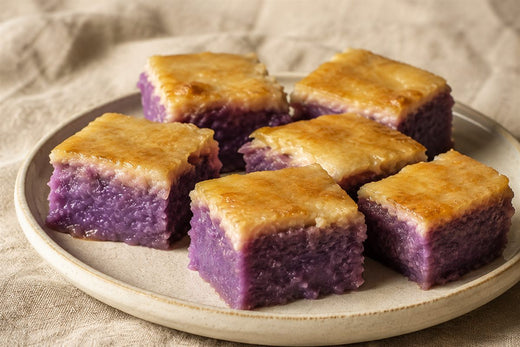
Ube Cassava Cake
The soft cassava and coconut cake.
See the recipe →The chef’s touch
Gentle frying is the key to softness.
Fry over medium heat, without rushing: too hot, and the sesame burns before the dough cooks. Stir gently so the buchi puff up evenly. Press the sesame in well and seal the filling to stop it escaping.
Lightly dipping the balls in water before the sesame helps it stick perfectly.
Mistakes to avoid
Three pitfalls for successful buchi.
Explore the world of ube
The Philippines are just one facet: explore the whole purple world.
Drinks
Lattes, smoothies, ube frappés.
Explore →Capsules
Lattes, cappuccino, affogato… ready in 30 s.
Explore →Desserts
Cheesecakes, cookies, cakes, pancakes.
Explore →Ice creams
Ice creams, nice cream, frozen mochi.
Explore →Breakfasts
Bowls, porridges, overnight oats.
Explore →Filipino recipes
Halaya, ensaymada, leche flan.
Explore →Ube Time Signatures
Our exclusive creations, found nowhere else.
Explore →Fancy these purple balls?
All you need is Kinampay ube powder for the halaya.
Your questions about this recipe.
How do you make ube buchi?
Fill balls of glutinous rice dough with ube halaya, roll them in sesame, then fry over medium heat until they puff up and turn golden.
What is buchi?
A fried glutinous rice ball coated in sesame, of Chinese-Filipino origin, often filled with a sweet paste.
Do ube buchi contain caffeine?
No, ube is naturally caffeine-free.
Can they be made ahead?
They're best just fried; you can prepare the raw balls and fry them at the last minute.
Can the glutinous rice dough be replaced?
No, it's what gives buchi their characteristic chewy texture.