Ube breads and pastries
Buttery brioches, morning rolls, steamed cakes, filled turnovers: Filipino baking loves ube. Here are the great purple pastries, each with its own recipe.
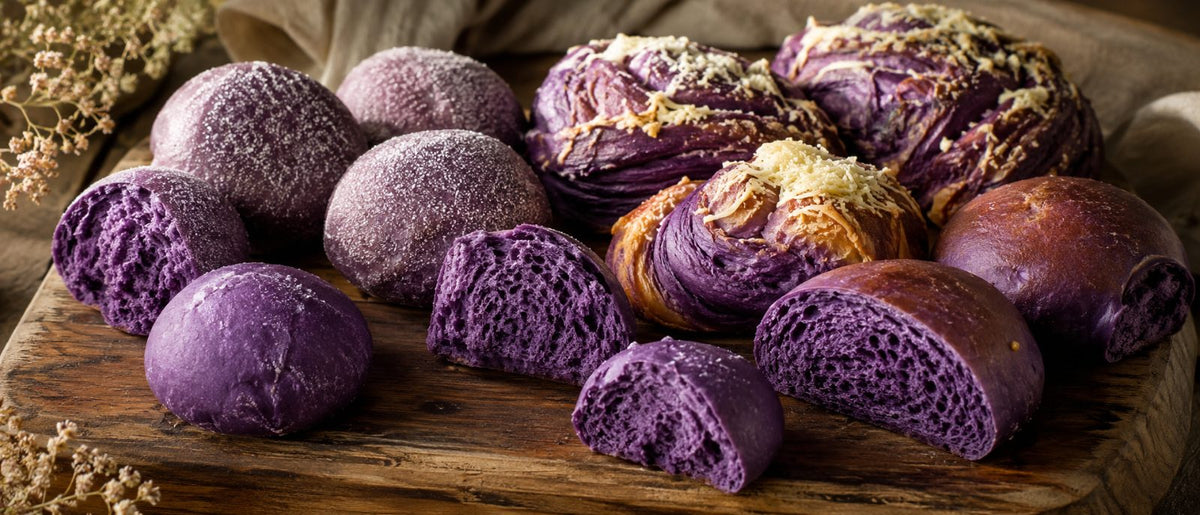
A generous bakery
In the Philippines, bread and pastry hold a central place: they are shared at breakfast, at merienda, at celebrations. Ube joins in naturally, colouring the crumb and scenting the fillings. From daily bread to festive brioche, here are the essentials.
The word pandesal comes from the Spanish pan de sal, salt bread. It is the most popular morning roll in the archipelago.
Brioches and soft breads
- Ube ensaymada: the queen brioche, soft, buttery and sweet, often filled with ube halaya.
- Ube pandesal: the morning roll, tender and lightly sweet, in a violet version.
For a deeply violet, fragrant crumb, work the ube powder straight into the dough, and keep a touch of ube halaya for the filling.
Steamed cakes and turnovers
- Ube puto: a little steamed rice cake, tender and light.
- Ube bibingka: a traditional rice cake, often served at celebrations.
- Ube hopia: small flaky turnovers, filled with an ube paste.
- Ube buchi: fried glutinous rice balls, rolled in sesame and filled.
Many of these pastries are made with glutinous rice flour, which gives them their tender, slightly chewy texture.
Where to start?
If you are new to Filipino baking, ensaymada and pandesal are excellent starting points: accessible doughs, a spectacular result once the violet crumb is revealed. Steamed cakes, for their part, need little equipment and forgive beginners.
- Filipino baking turns ube into brioches, breads, steamed cakes and turnovers.
- Ensaymada and pandesal are the most accessible to begin with.
- Ube powder colours the crumb and scents the fillings.
- Many recipes use glutinous rice flour.
See all Filipino desserts, ube halaya (the base of many fillings), or ube in Filipino culture.
Your Filipino pastries, homemade.
Our 100% ube Kinampay powder colours the crumb and scents your brioches, breads and cakes. The baking of the archipelago, in your kitchen.
Your questions: breads and pastries.
What are the Filipino ube pastries?
Ensaymada, pandesal, puto, bibingka, hopia and buchi are among the most loved ube breads and pastries.
What is ensaymada?
A soft, buttery, sweet Filipino brioche, often filled with ube halaya and topped with grated cheese and sugar.
How do you get a deeply violet crumb?
By working the ube powder straight into the dough. The colour reveals itself on baking and stays intense if the powder is pure.
Which Filipino pastry should you start with?
With ensaymada or pandesal: accessible doughs with a spectacular result. Steamed cakes are also forgiving for beginners.
Can these pastries be made with ube powder?
Yes, ube powder blends easily into doughs and fillings, with a steady dose and a reliable colour.